
They did it / Ils l’ont fait
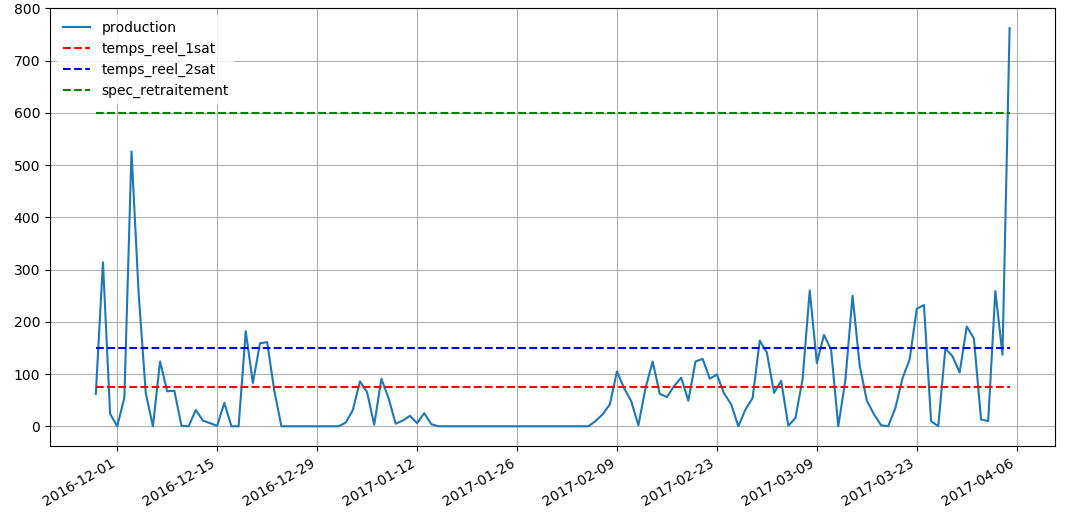
 The blue line in the above plot shows the amount of L2A products delivered by our MUSCATE facility every day since end of November. Even if the start looked promising, we had several issues. MUSCATE bugs, PEPS bugs, and the large blanc period in January was related to the installation of the new cluster and migration of the disks, and the recovery of the surprises it brought. Many of the following drops happened when its disks were slow. Some of them are also due to MUSCATE’s own bugs, which often happen on week-ends when there is no-one to restart the production. But since end of March our cluster’s bay of disks is working very well, the number of bugs is really decreasing, and our exploitation team is more confident on the system capacities and launches more jobs in parallell. And finally, yesterday, we passed the green bar, which is our requirement in terms of number of L2A to produce per day in reprocessing conditions. It represents 8 times the acquisitions performed by Sentinel-2A over our zones in one day (which is the red dashed line).Congrats to all the teams ! And now, beer ? wine ? champagne ?
  La ligne bleue sur la courbe ci-dessus indique le nombre de produits Sentinel-2 de niveau 2A, fournis par notre segment sol MUSCATE depuis fin novembre. Même si le début était encourageant, nous avons eu beaucoup de problèmes : des bugs de MUSCATE, des bugs de PEPS, et la période blanche de janvier correspond à la mise en place du nouveau cluster, et la récupération des surprises qu’il a causées. Plusieurs des baisses de production sont aussi dues aux engorgements des baies de disques que nous avons eu au début, d’autres viennent encore de bugs résiduels, qui ont la manie d’apparaître le week-end, quand il n’y a personne pour relancer la production.Mais depuis fin mars, les baies de disques « torchent », les bugs disparaissent, et notre équipe d’exploitation fait davantage confiance au système pour lancer de grosses productions. Et c’est finalement hier que nous avons passé pour la première fois la barre verte, qui est notre spécification de production en conditions de retraitement. Elle représente aussi 8 fois la capacité d’acquisition de tuiles par Sentinel-2 sur nos zones d’intérêt (la ligne rouge pointillée). Un grand bravo et merci à tous. Et maintenant, bière, vin, champagne ?