Sentinel-2

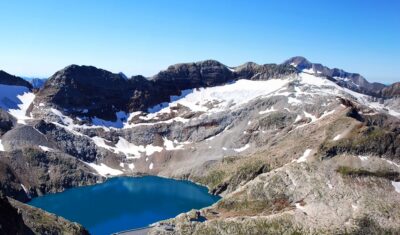
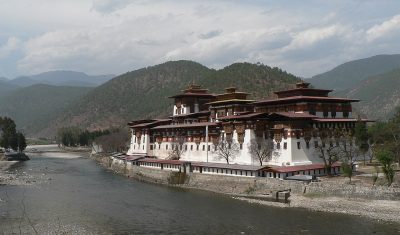
Mo Chhu, dzong of Punakha.

Tracking the sediment plume of the 29 October 2026 GLOF in Bhutan

A glacial lake outburst flood (GLOF) occurred on 29 Oct in northern Bhutan, creating a debris flow in the Mo Chhu valley, Gasa district. The exact cause of the GLOF is still unclear but we know that it originates from Sintaphu Tsho, a moraine-dammed lake at an elevation of about 4500 m. This event has […]

05.11.2026

Adjacency effects, or how pixels from the entire region can skew your measurements

=> Neighborhood issues also exist in Earth observation. And in a sense, they are even much more serious than on a social level, since neighbors located more than 30 km away can cause interference! Fortunately, we have the means to correct these problems without resorting to law enforcement—just using algorithms. This entire article is based […]

04.11.2026

Les effets d’environnement, ou comment les pixels de toute la région peuvent perturber vos mesures.

=> Les problèmes de voisinage existent aussi en observation de la terre. Et en un sens, ils sont même beaucoup plus graves que sur le plan social, puisque vos voisins situés à plus de 30 km peuvent pour perturber ! Heureusement, nous disposons de moyens pour corriger ces problèmes, sans recourir à la force publique, […]

02.11.2026

New clear-sky image of the Rasuwa rock-ice avalanche

On 08 Sep 2026, Sentinel-2 acquired a clear-sky image near the release area of the landslide which caused the catastrophic flood in Nepal. Using this image and a pre-event digital elevation model (Berthier 2026) we can analyze the upper part of the avalanche runout profile. The block of rock and ice was released near 5120 […]

09.09.2026

Near real time snow cover maps in the Copernicus Browser!

Copernicus provides near real time snow cover maps at 20 m resolution (fractional snow cover, code name: FSC OG). These products have been recently reprocessed and are now available through the Copernicus Data Space Ecosystem (CDSE) API and visualization tool, the Copernicus Browser! The latter is very useful to explore the data, for example if […]

26.05.2026

The missing link to valorize CESBIO’s applicative research works

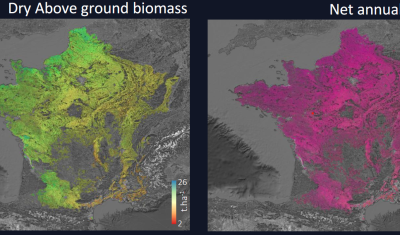
=>  My colleagues at CESBIO are extremely creative! Over the past ten years, they have developed a wide range of new products and methods for extracting information from Copernicus data. They don’t just develop and validate the method on a few sites; they continue their work until they have produced data for the whole of […]

23.02.2026

Le chaînon manquant dans la valorisation des travaux de recherche en télédétection

=> Mes collègues du CESBIO sont très créatifs ! Ils ont mis au point, au cours des dix dernières années, un grand nombre de nouveaux produits et de méthodes d’extraction de l’information à partir des données Copernicus (Sentinel-1 et 2). Et bien souvent, ils ne s’arrêtent pas à la mise au point de la méthode […]

Sentinel-2 overtakes Landsat in scientific litterature

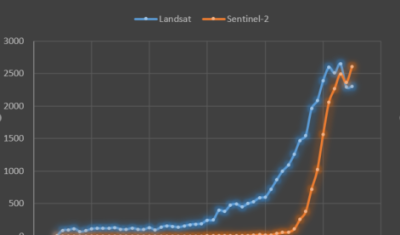
OpenAlex is a new, yet already very useful, open database for exploring scientific literature. For an upcoming blog post on the CNES Datacampus website, I analysed the proportion of papers that used only one of the Sentinel-2 or Landsat missions, as well as those that used both, in 2025. What struck me was that Sentinel-2 […]

20.02.2026

Everything, Everywhere, All at Once

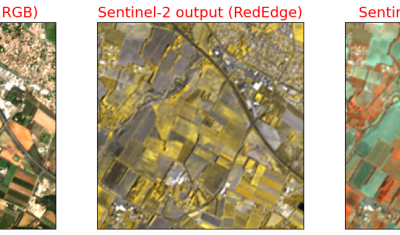
This blog post is not a review of the excellent and deeply philosophical, parallel-universes delirium movie by Daniel Kwan and Daniel Scheinert, but the title of this drama resonates with the capabilities of our latest algorithm, which has just been published in Remote Sensing of Environment: J. Michel and J. Inglada, « Temporal attention multi-resolution fusion […]

17.02.2026

Rechercher