Sentinel-2A captures a giant ice avalanche in Tibet

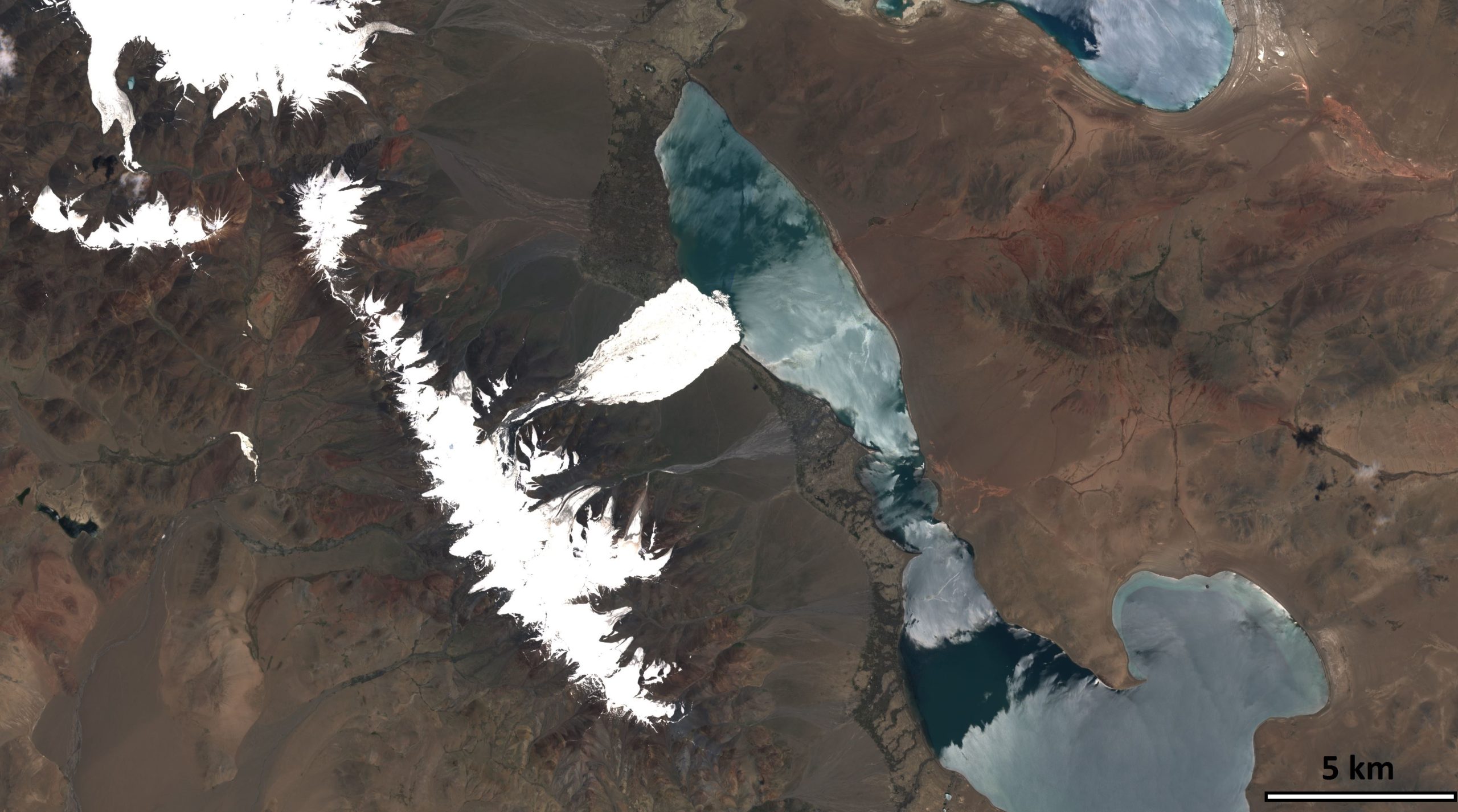
The Nature News website reported yesterday on a massive ice avalanche that happened in Rutog, Tibet, on 17 July 2016. This ice avalanche killed 9 people and may be one the largest ever observed. The ice and rock mixture spread over 6 km from the collapse point up to the Aru Co lake shoreline.
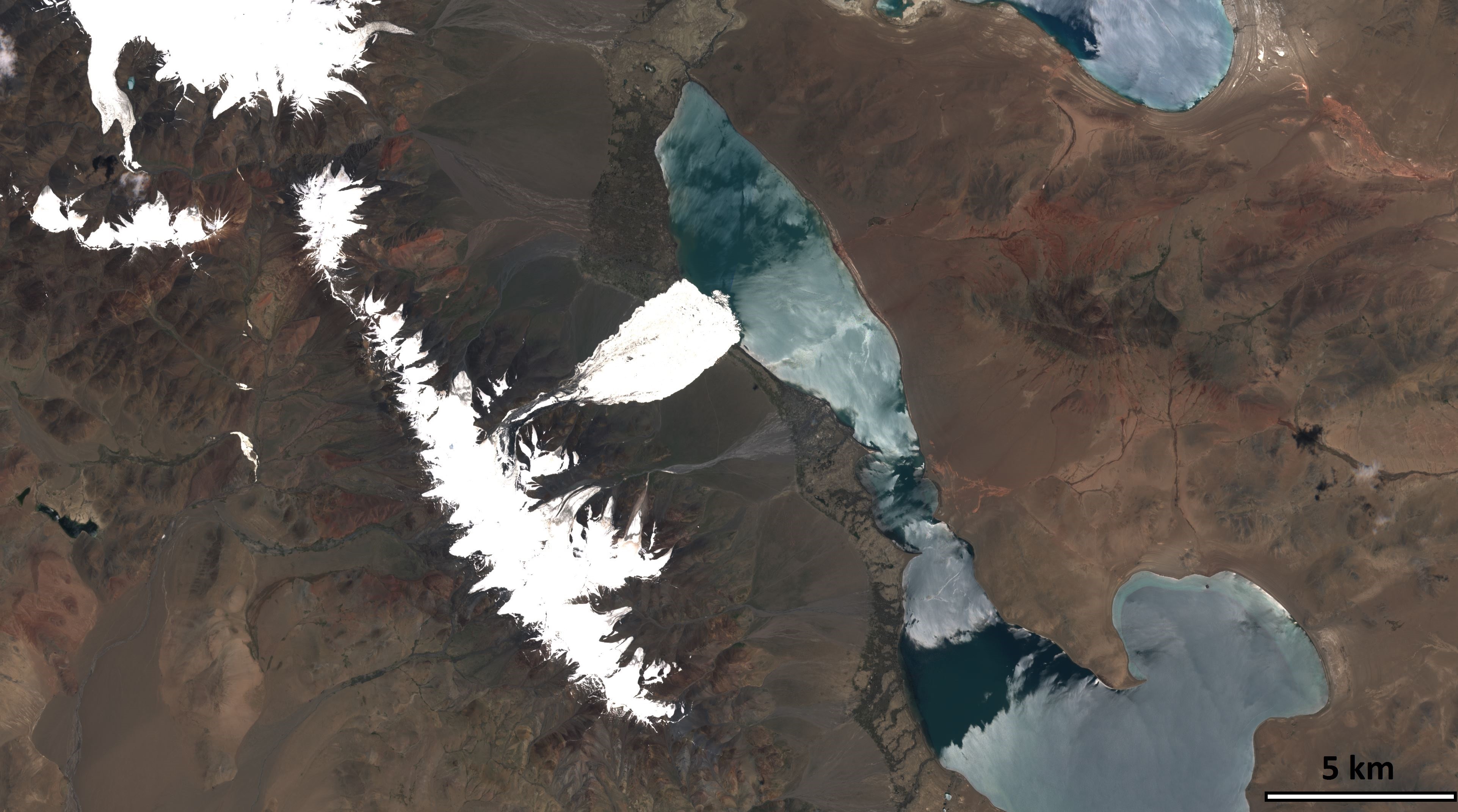
Sentinel-2A image of the Rutog ice avalanche acquired on 21-Jul-2016 (4 days after the event). Click on the image to see at full resolution (1 pixel = 10m).

Nothing escapes from Sentinels! I used the Sentinel-2A image above to digitalize the avalanche extent and found that the avalanche covered a total area of 8.8 km², close to the value that was indicated in several news websites (10 km²).

A closer view of the avalanche site is available here: http://english.cri.cn/12394/2016/07/20/3441s934928.htm

[edit] The second episode about this avalanche is here.

Plus d'actualités

Near real time snow cover maps in the Copernicus Browser!

Copernicus provides near real time snow cover maps at 20 m resolution (fractional snow cover, code name: FSC OG). These products have been recently reprocessed and are now available through the Copernicus Data Space Ecosystem (CDSE) API and visualization tool, the Copernicus Browser! The latter is very useful to explore the data, for example if […]

The missing link to valorize CESBIO’s applicative research works

=>  My colleagues at CESBIO are extremely creative! Over the past ten years, they have developed a wide range of new products and methods for extracting information from Copernicus data. They don’t just develop and validate the method on a few sites; they continue their work until they have produced data for the whole of […]

Le chaînon manquant dans la valorisation des travaux de recherche en télédétection

=> Mes collègues du CESBIO sont très créatifs ! Ils ont mis au point, au cours des dix dernières années, un grand nombre de nouveaux produits et de méthodes d’extraction de l’information à partir des données Copernicus (Sentinel-1 et 2). Et bien souvent, ils ne s’arrêtent pas à la mise au point de la méthode […]

Rechercher