Sentinel-2 sees caterpillars nibbling French forests
 =>
=> 
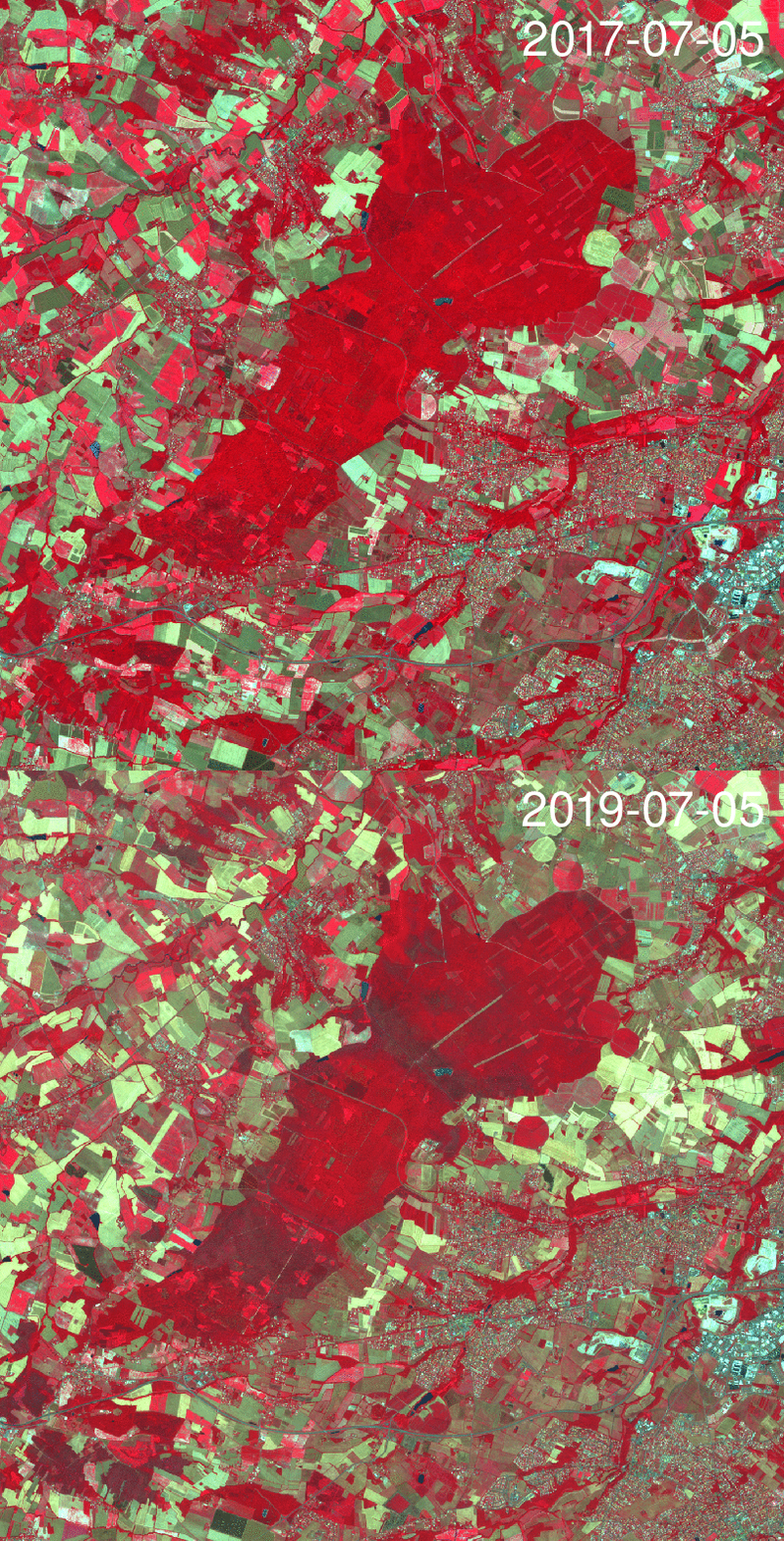
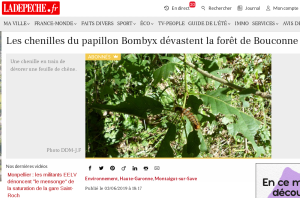
One of my colleagues from CESBIO and CNES, a specialist in automatic classification methods and creator of free software named after Monteverdi’s opera, told me that during his last Sunday walk in the Bouconne forest, the trees were being devoured by caterpillars. By listening, you could even hear them nibbling on the leaves. Even if he doesn’t have my exaggeration tendencies, I wanted to check with my favourite satellite, Sentinel-2.
The image below compares, in false colours (the more red the vegetation is, the more vigorous the vegetation), the images acquired on 5 July 2017 and 5 July 2019 (the same period was cloudy in 2018). The differences are impressive, the red colour fades and almost disappears in places.
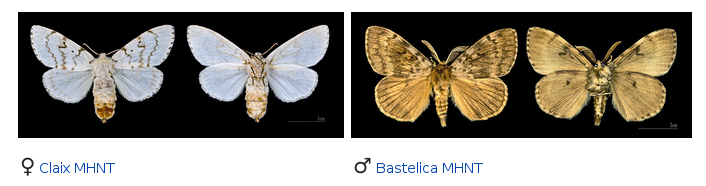
 A little research has taught me that this phenomenon is due to the caterpillar of a butterfly, the disparate gypsy moth, of local origin. Some years, it swells. There is an Asian variant of it that was introduced in the United States in the 19th century. She caused serious damage there under the name of Gypsy moth. This butterfly is particularly fond of oak leaves. It is called « disparate » because the male and female have very different aspects:
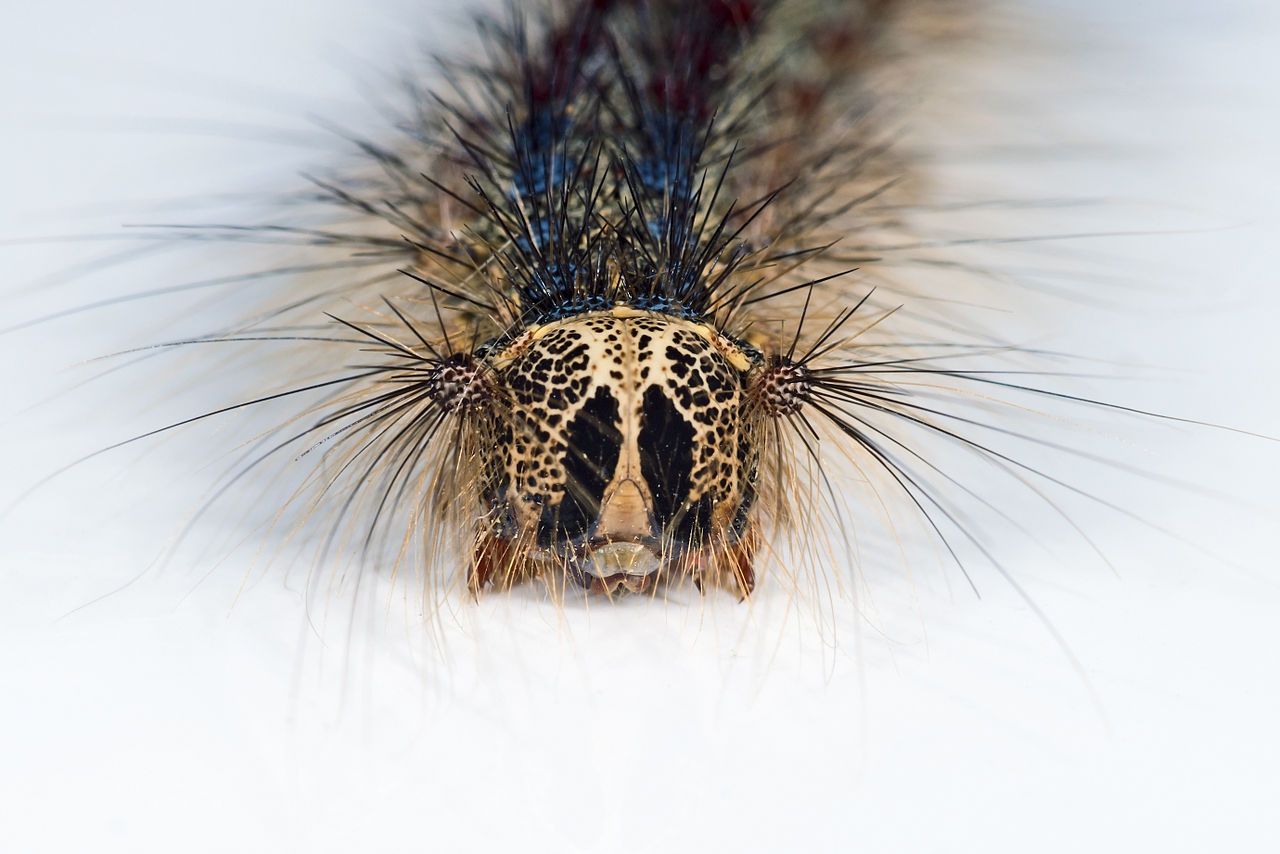
It is its magnificent caterpillar which causes all the damage, when the conditions are favourable:

Par Didier Descouens — Travail personnel, CC BY-SA 4.0, Lien
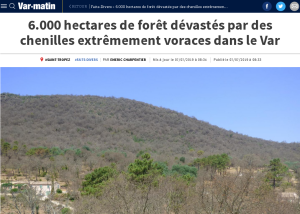
The forest of Bouconne is not the only one in France to have been attacked this year, it is also the case of the forest of the Moors on the French Riviera, and there the effects are even more impressive, as shown in the article of var morning below, and especially the comparison of the images 2018 and 2019. Seen from above, you’d think the forest had burned down. It seems that the trees can recover from gypsy moth outbreaks, as the larvae turn into butterflies in July and let the leaves grow back.
 |  |
The effects of the gypsy moth in the var region, are highly visible in the Sentinel-2 images :