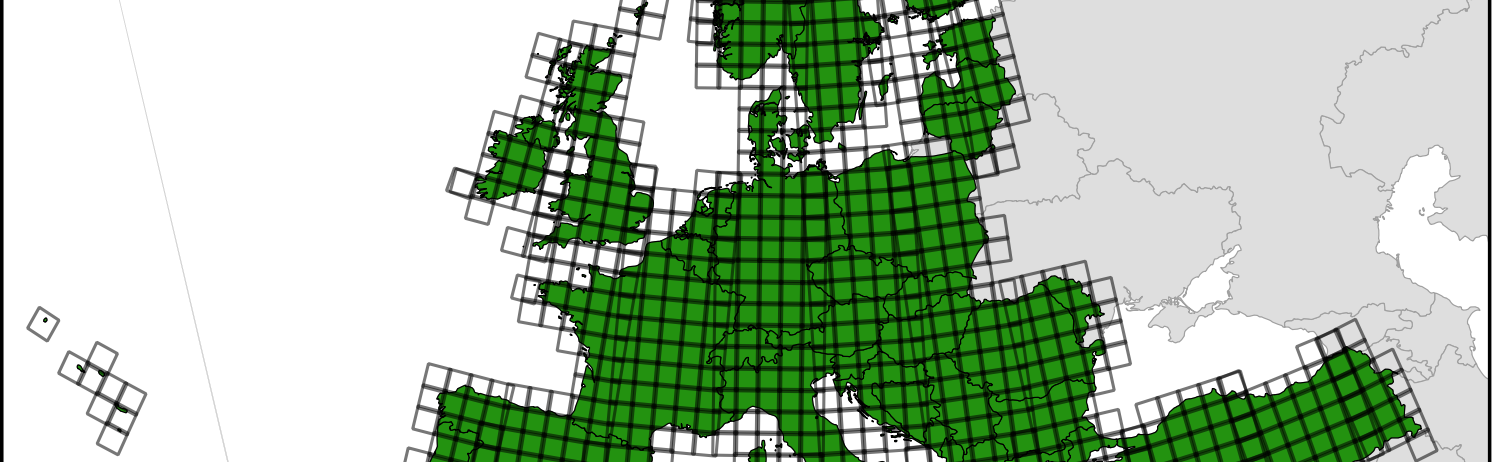
EEA 34 countries and corresponding Sentinel-2 tiles

MAJA and LIS selected for the next Pan European high resolution snow and ice monitoring service

The European Environment Agency (EEA) has selected a consortium led by Magellium to implement the next Pan European high resolution snow and ice monitoring of the Copernicus Land Monitoring Service.
click to enlarge
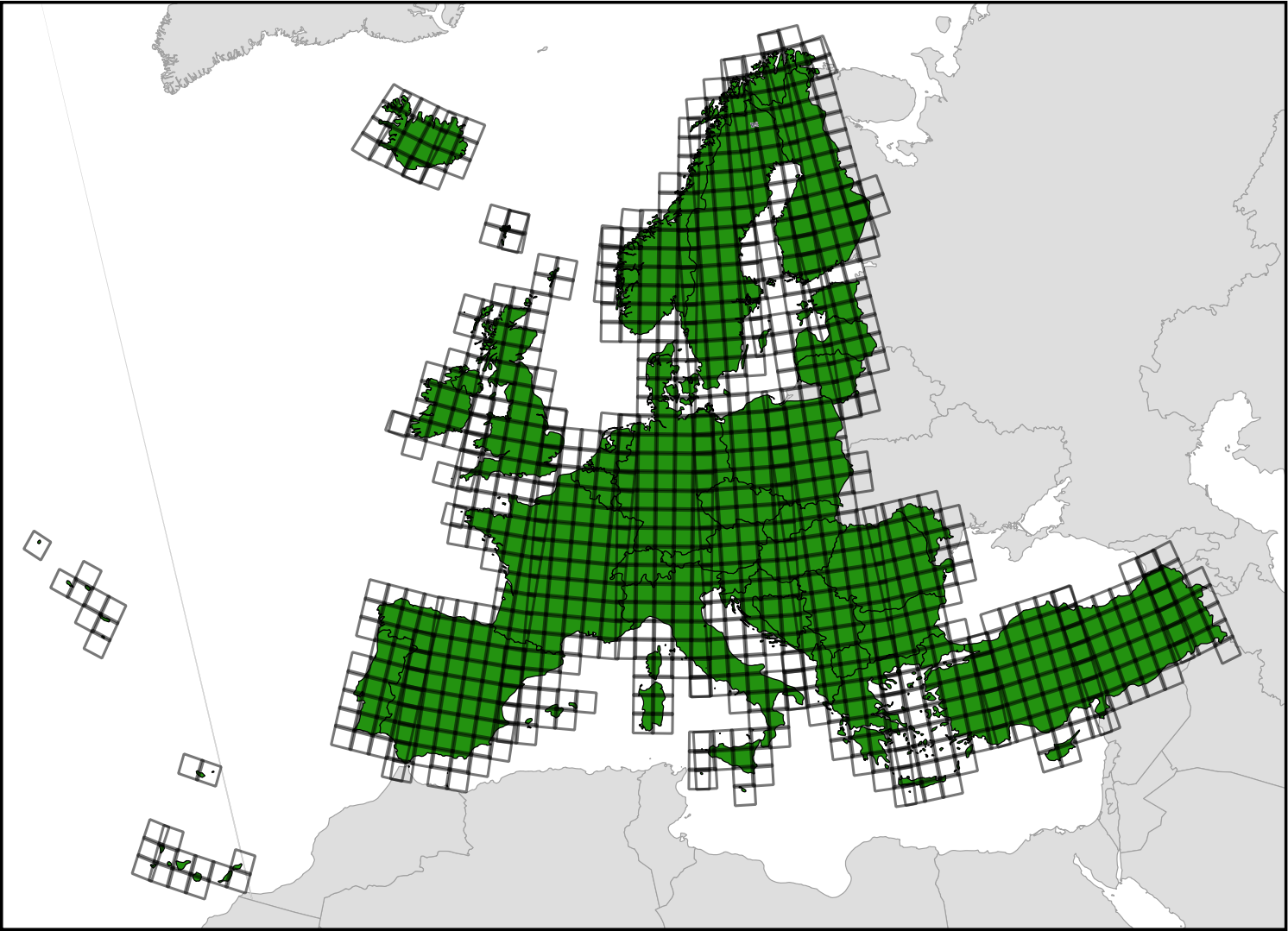
EEA 34 countries and corresponding Sentinel-2 tiles

This future service aims to monitor three variables at 20 m resolution over the tiles displayed above:

  1. Fractional Snow Cover (FSC)
  2. Permanent Snow Line (PSL)
  3. River and Lake Ice (RLI)

All products should be generated from atmospherically corrected Sentinel 2 data. For FSC and RLI the product should be available no later than 3 hours after the input Sentinel-2 is published on the Copernicus Open Access Hub. Cesbio and Cnes provide MAJA software for the atmospheric correction and cloud detection and LIS for the snow cover detection and permanent snow mapping. Astri Polka is responsible for the RLI implementation. Meteo-France contributes to the FSC and PSL evaluation and University of Oslo to the RLI. Magellium is in charge of developing the production system and to operate it on one of the DIAS centers. The products will be freely distributed to any user.
click to enlarge
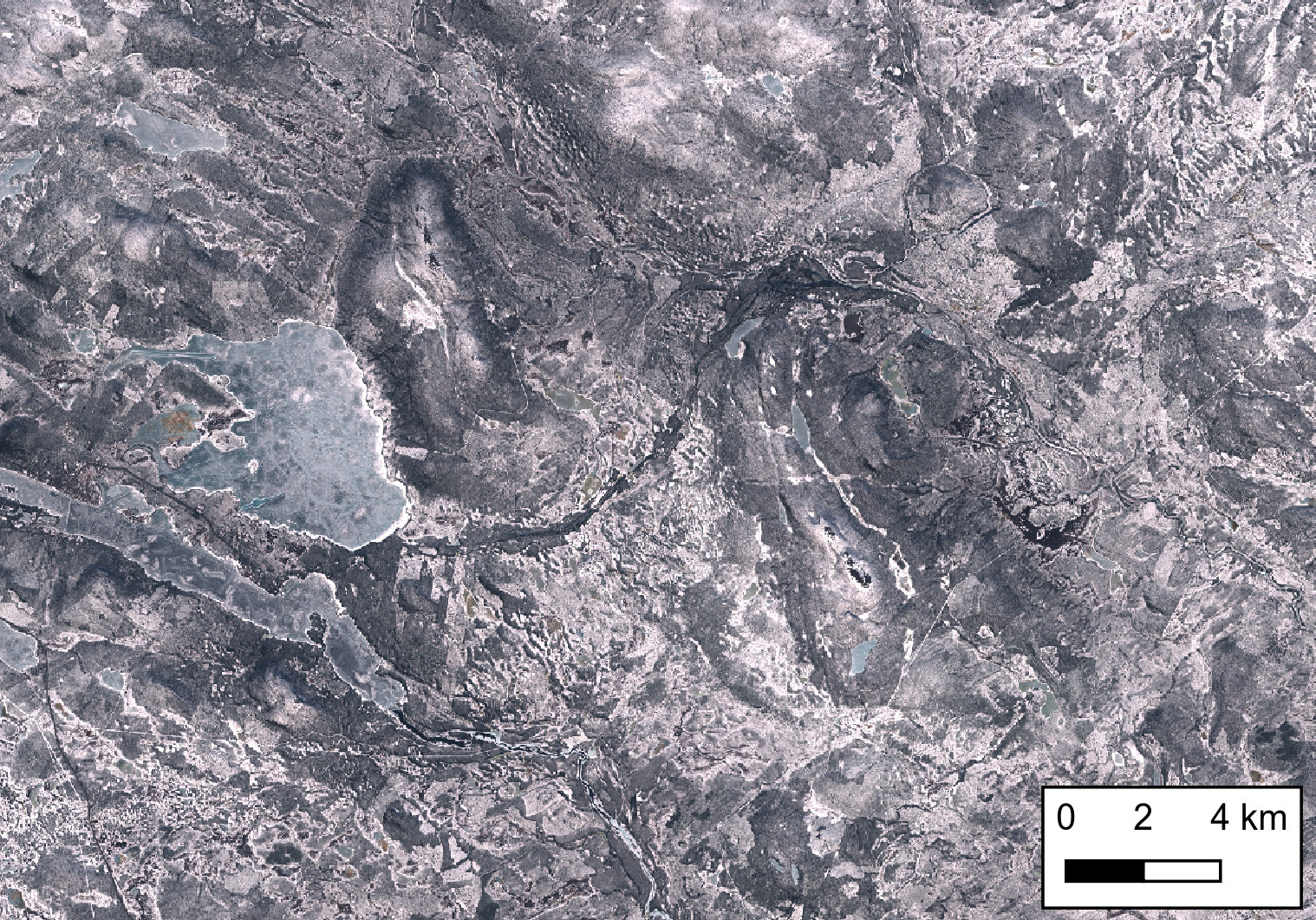
Snow and ice in the Swedish Lapland by Sentinel-2. The image is centered on Salmijärvi near Kiruna where is located the prime ground station for Sentinel-2 mission control. The image was acquired on 23 Apr 2019, the day of the EEA contract award notice.

PS. If you’d like to join the project we are recruiting! https://emploi.cnrs.fr/Offres/CDD/UMR5126-EMIBAS-003/Default.aspx?lang=EN


Plus d'actualités

The missing link to valorize CESBIO’s applicative research works

=>  My colleagues at CESBIO are extremely creative! Over the past ten years, they have developed a wide range of new products and methods for extracting information from Copernicus data. They don’t just develop and validate the method on a few sites; they continue their work until they have produced data for the whole of […]

Le chaînon manquant dans la valorisation des travaux de recherche en télédétection

=> Mes collègues du CESBIO sont très créatifs ! Ils ont mis au point, au cours des dix dernières années, un grand nombre de nouveaux produits et de méthodes d’extraction de l’information à partir des données Copernicus (Sentinel-1 et 2). Et bien souvent, ils ne s’arrêtent pas à la mise au point de la méthode […]

Sentinel-2 overtakes Landsat in scientific litterature

OpenAlex is a new, yet already very useful, open database for exploring scientific literature. For an upcoming blog post on the CNES Datacampus website, I analysed the proportion of papers that used only one of the Sentinel-2 or Landsat missions, as well as those that used both, in 2025. What struck me was that Sentinel-2 […]

Rechercher