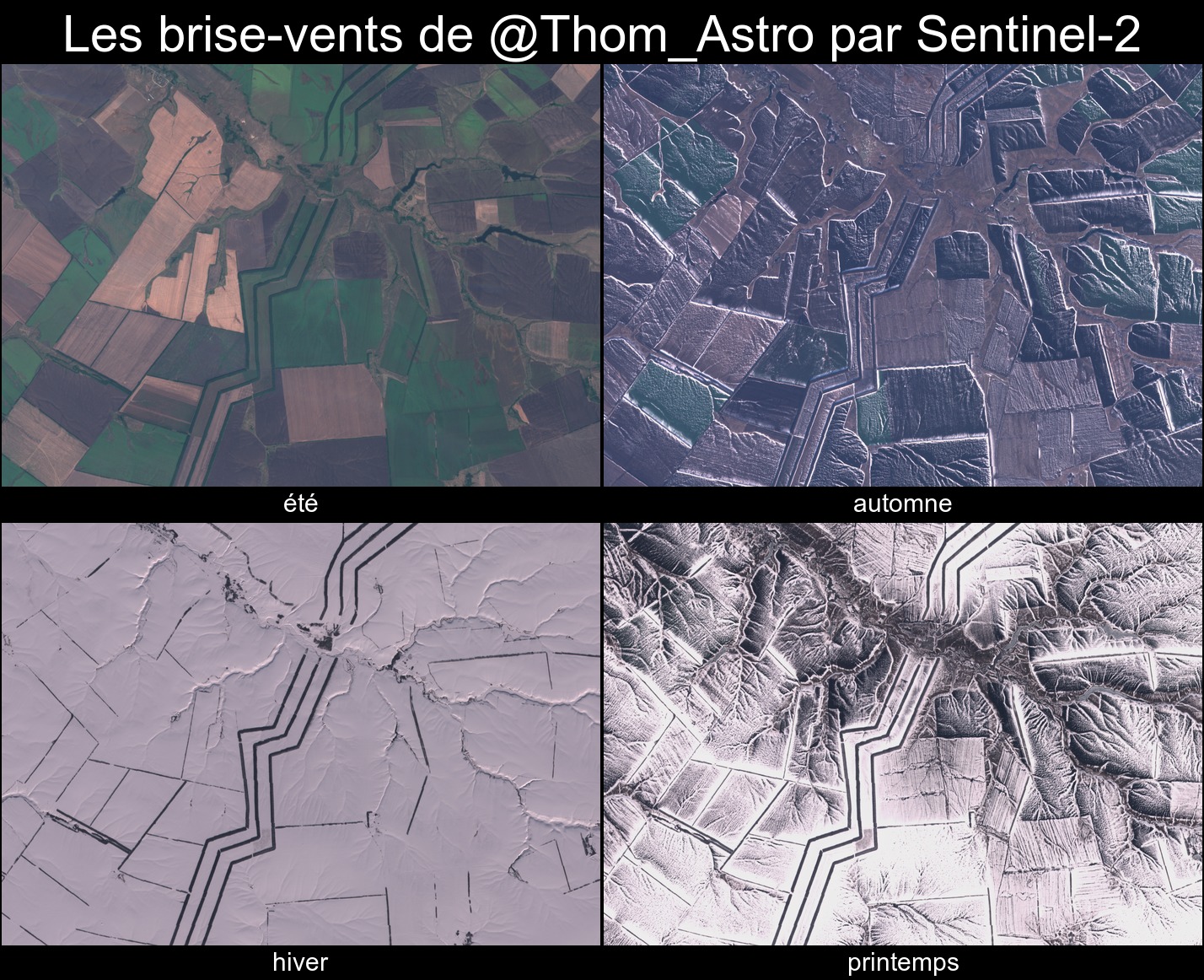
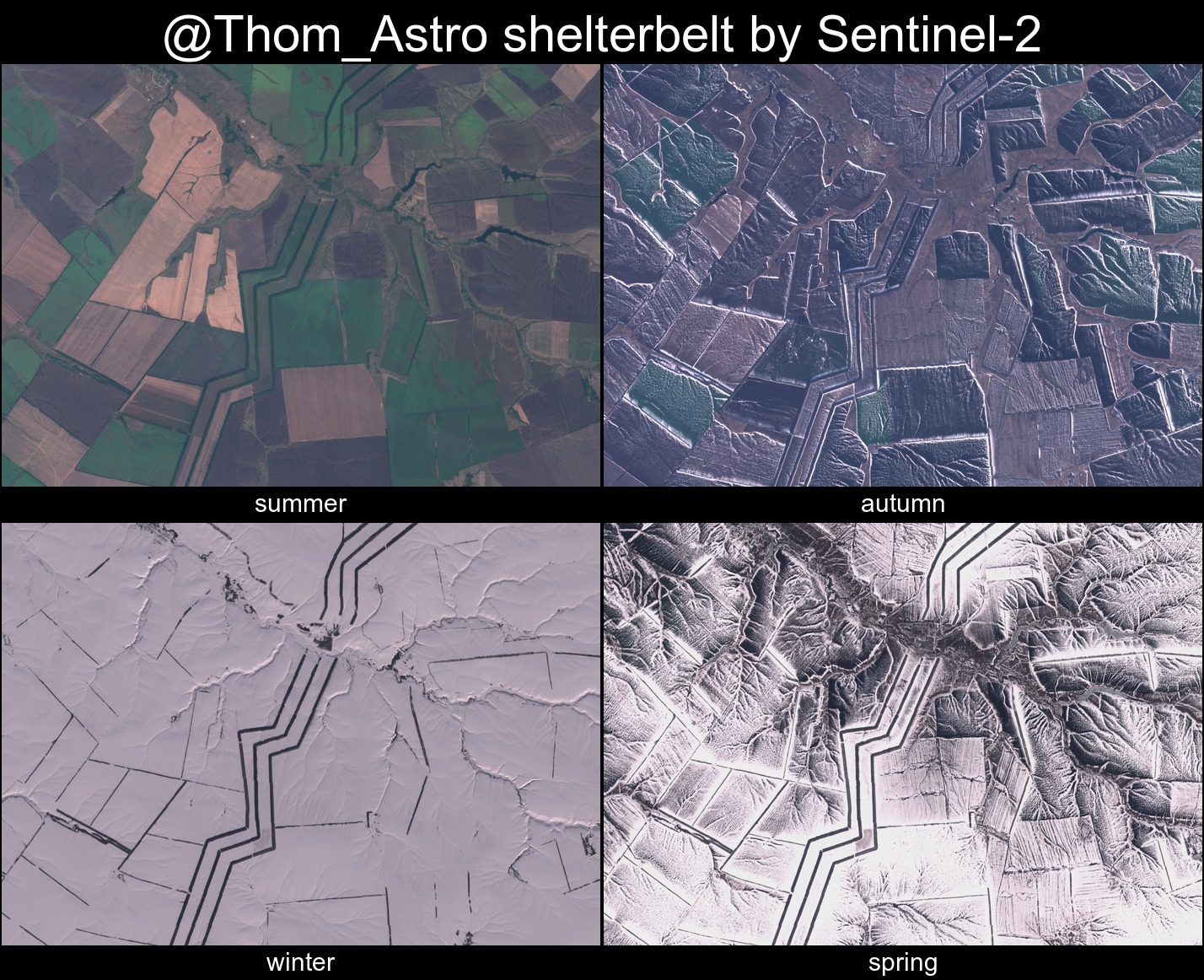
Four seasons of Thomas Pesquet’s shelterbelt by Sentinel-2

=>

On Feb 16 2017, French Astronaut Thomas Pesquet shot this photo from the International Space Station.

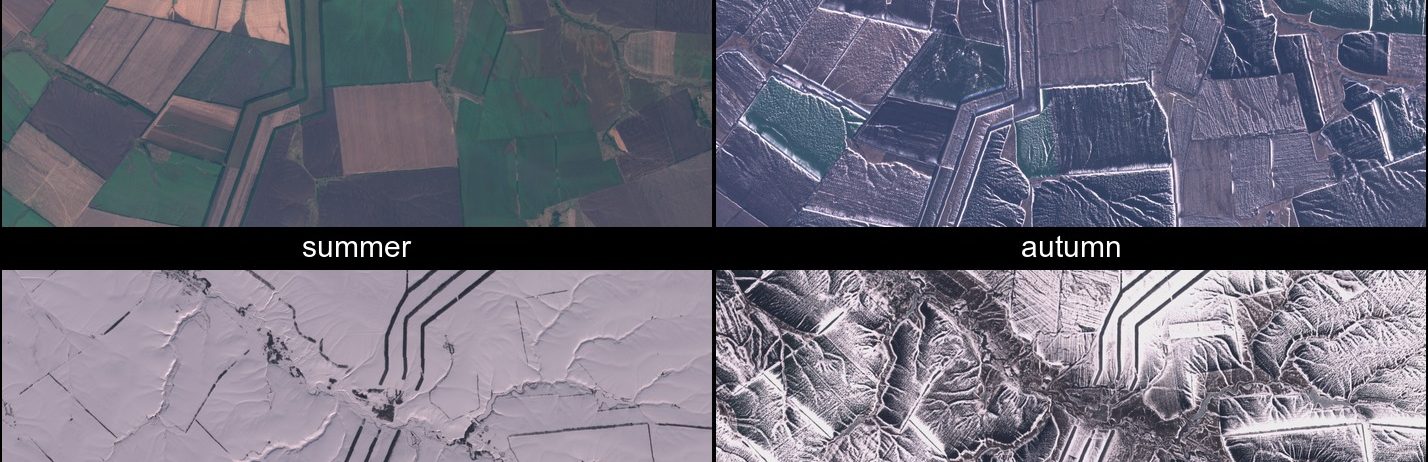
Thomas’ followers quickly spotted a shelterbelt or windbreak in South Russia, near Volgograd [1]. Astronauts pictures are great to show the value of Earth observation from space. However, Thom_Astro cannot compete with Sentinel-2 satellites, which provide systematic, multispectral, coverage of the land surface, with a constant acquisition angle. Below is a selection of four images taken by Sentinel-2A of the same site. On the autumn image, a thin layer of snow blown by the wind brings out the asperities of the surface. In the spring the melting snow reveals this fertile black soil or chernozem, which covers the great Russian steppes.
[1] « Fending Off the Wind on the Steppe » NASA Earth Observatory Image of the Day.

Plus d'actualités

Near real time snow cover maps in the Copernicus Browser!

Copernicus provides near real time snow cover maps at 20 m resolution (fractional snow cover, code name: FSC OG). These products have been recently reprocessed and are now available through the Copernicus Data Space Ecosystem (CDSE) API and visualization tool, the Copernicus Browser! The latter is very useful to explore the data, for example if […]

Suivi du manteau neigeux dans les parcs naturels des Alpes franco-italiennes

Dans les Alpes, le manteau neigeux est un stock d’eau saisonnier naturel dont dépendent la faune, la flore et les humains pour de multiples usages (refuges, bétail, etc.). Dans le cadre du projet ACLIMO financé par le programme européen Interreg ALCOTRA, le Cesbio a été sollicité pour mettre en oeuvre un outil d’estimation de l’équivalent […]

The missing link to valorize CESBIO’s applicative research works

=>  My colleagues at CESBIO are extremely creative! Over the past ten years, they have developed a wide range of new products and methods for extracting information from Copernicus data. They don’t just develop and validate the method on a few sites; they continue their work until they have produced data for the whole of […]

Rechercher