
Some summer news about Sentinel-2 and THEIA’s level 2A production
 =>
=> 
Theia – MUSCATE
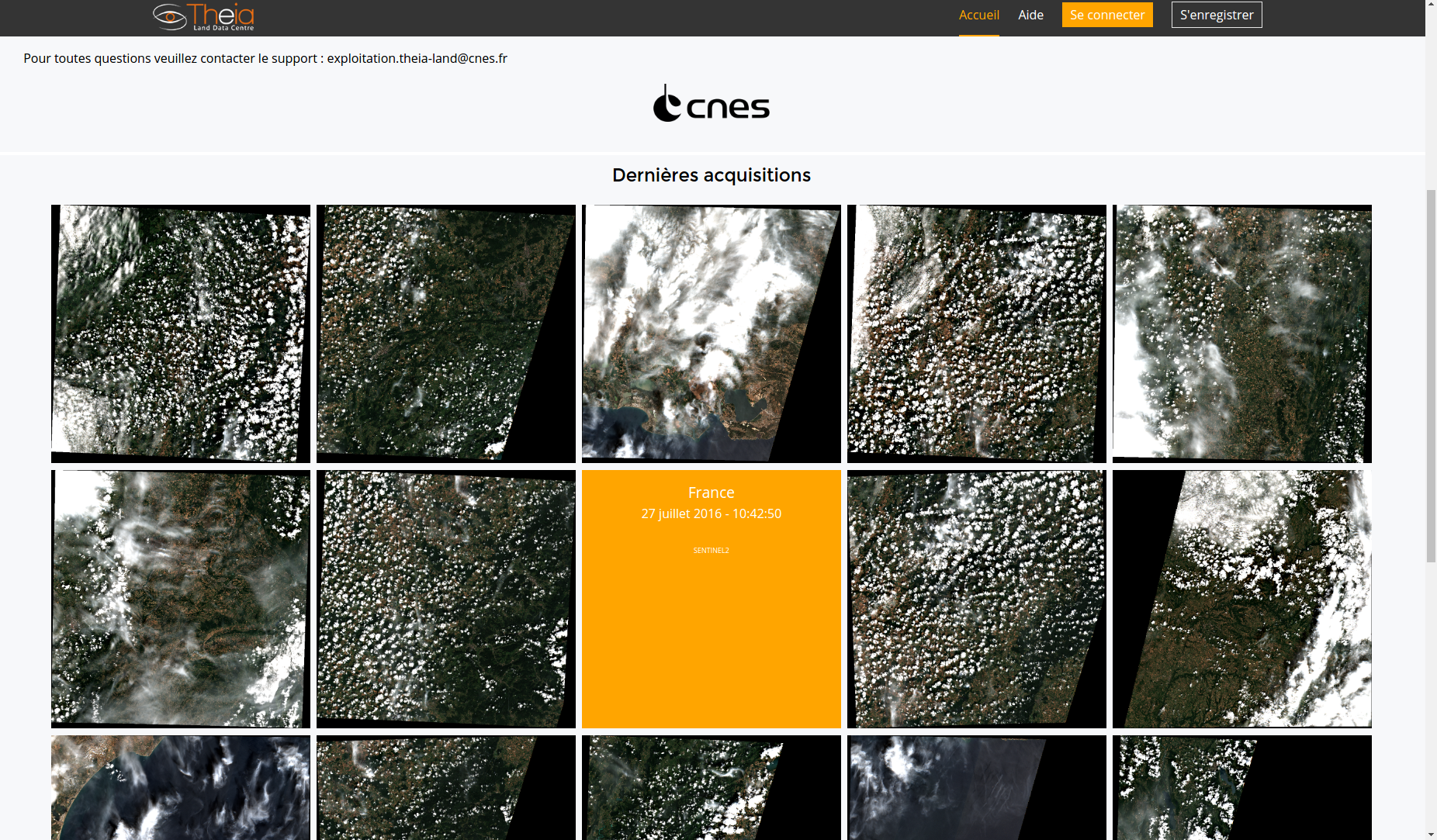
I had a week of work in the middle of my holidays, which enabled be to see how the work on Sentinel-2 L2A data distribution is progressing. My colleagues who worked all July (Dominique, Joelle, Céline…) did a great job : they were able to process a large data set of L2A products with MUSCATE : all the images taken by Sentinel-2 between November 2015 and end of july 2016. The quicklooks may be seen here. It is not by pure perversity that we show the data without enabling you to download them (a few demonstration products are available for download). The distribution server is still a provisional facility, and we are still chasing the last bugs (and we found some 🙁 ) If the bug correction does not take too long, we should be able to deliver the L2A products generated by MACCS within MUSCATE from September, starting with France and extending progressively.
Sentinel-2A
Meanwhile, Sentinel-2 acquisitions above Europe and Africa are now steady, with an unavailability rate which decreased a lot since beginning of June. However, we still don’t know when we will have 10 days repetitivity for the whole earth land masses. The data are also still ortho-rectified without ground control points, with a reduce registration accuracy. ESA ‘s ramp-up phase scenario still mentions that the routine phase should start one year after launch. The system is late by more than a month; and above all, we still do not have an official date for this. However, this system is built for 15 years, we can afford some patience…
Sentinel-2B
Sentinel-2B launcher is now VEGA and not Rockot anymore. Sentinel-2 will therefore be launched from Kourou. There is still a launch possibility in December, but the most probable would be March 2017.