
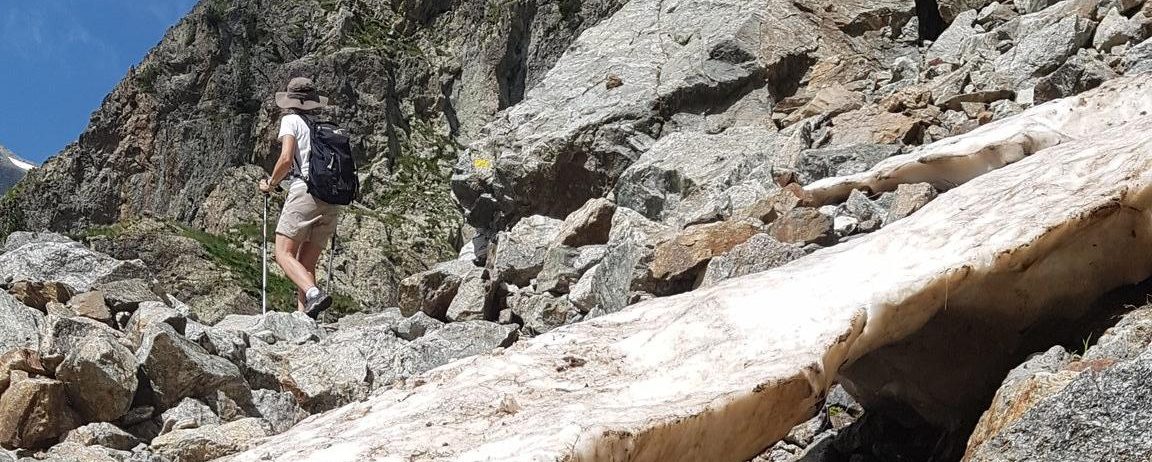
Using Sentinel-2 to prepare your hike

The departmental council of the Alpes de Haute-Provence has put online 6,500 km of hiking trails throughout its territory. These trails are visible on the site www.rando-alpes-haute-provence.fr which works with Geotrek software.

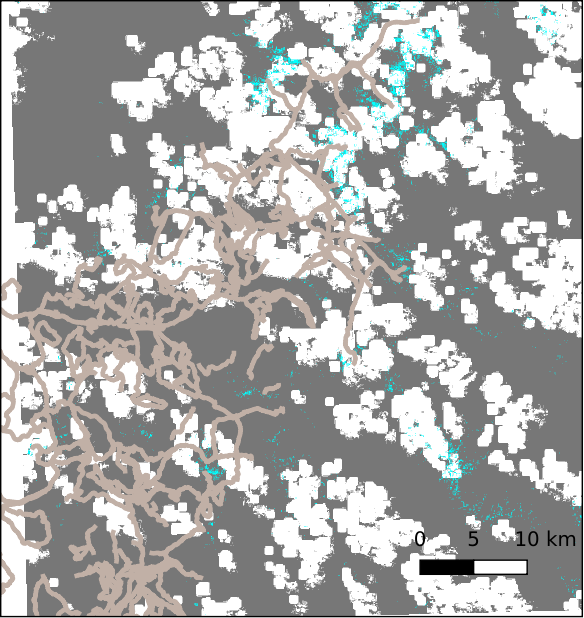
To allow hikers to better prepare their outing, it might be useful to add the 20 m resolution snow maps produced by Theia from Sentinel-2 observations. The example below shows the hiking routes in the north of the Mercantour Park superimposed on the snow map of July 4. There were many clouds on that day (white) but the LIS algorithm manages to distinguish the snow patches (cyan blue) between the clouds.
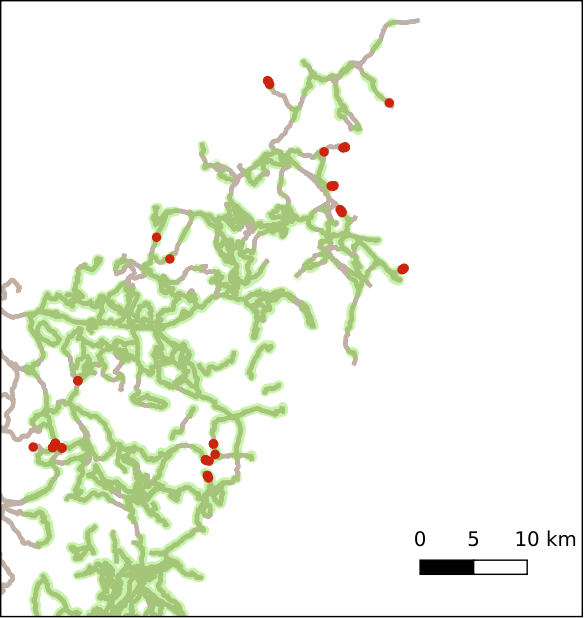
By sampling the snow map with the hiking routes, it’s possible to mark the snow-covered (in red) and snow-free (in green) passages.
Just add the openstreetmap layer on the map and you are ready!
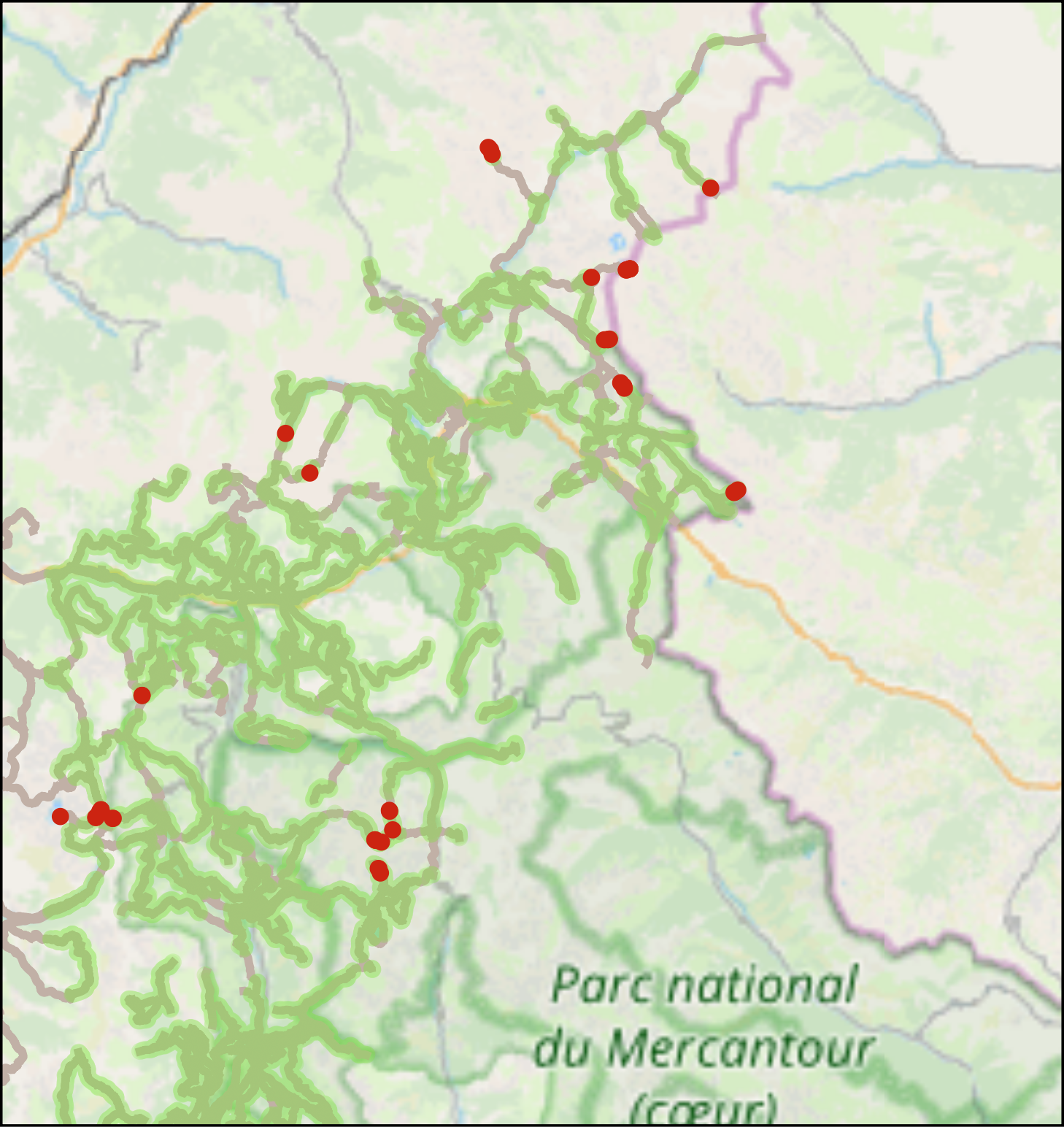
Geotrek software allows you to add external raster layers. To facilitate the development of this service, Theia should offer the distribution of snowmaking maps in the form of Cloud Optimized GeoTIFF. During this time the field team takes care of the validation!

Plus d'actualités

Near real time snow cover maps in the Copernicus Browser!

Copernicus provides near real time snow cover maps at 20 m resolution (fractional snow cover, code name: FSC OG). These products have been recently reprocessed and are now available through the Copernicus Data Space Ecosystem (CDSE) API and visualization tool, the Copernicus Browser! The latter is very useful to explore the data, for example if […]

Suivi du manteau neigeux dans les parcs naturels des Alpes franco-italiennes

Dans les Alpes, le manteau neigeux est un stock d’eau saisonnier naturel dont dépendent la faune, la flore et les humains pour de multiples usages (refuges, bétail, etc.). Dans le cadre du projet ACLIMO financé par le programme européen Interreg ALCOTRA, le Cesbio a été sollicité pour mettre en oeuvre un outil d’estimation de l’équivalent […]

The missing link to valorize CESBIO’s applicative research works

=>  My colleagues at CESBIO are extremely creative! Over the past ten years, they have developed a wide range of new products and methods for extracting information from Copernicus data. They don’t just develop and validate the method on a few sites; they continue their work until they have produced data for the whole of […]

Rechercher