
Using Sentinel-2 to prepare your hike

The departmental council of the Alpes de Haute-Provence has put online 6,500 km of hiking trails throughout its territory. These trails are visible on the site www.rando-alpes-haute-provence.fr which works with Geotrek software.

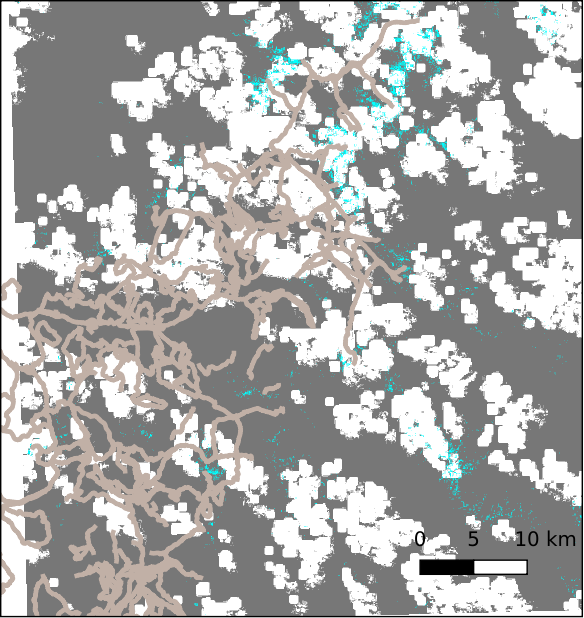
To allow hikers to better prepare their outing, it might be useful to add the 20 m resolution snow maps produced by Theia from Sentinel-2 observations. The example below shows the hiking routes in the north of the Mercantour Park superimposed on the snow map of July 4. There were many clouds on that day (white) but the LIS algorithm manages to distinguish the snow patches (cyan blue) between the clouds.
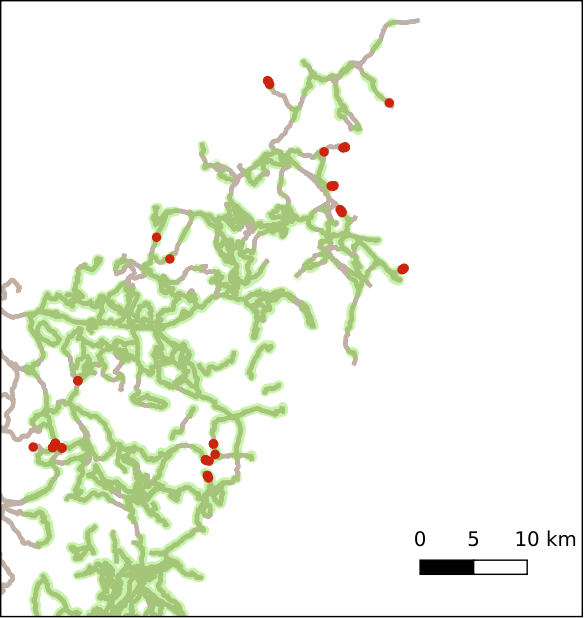
By sampling the snow map with the hiking routes, it’s possible to mark the snow-covered (in red) and snow-free (in green) passages.
Just add the openstreetmap layer on the map and you are ready!
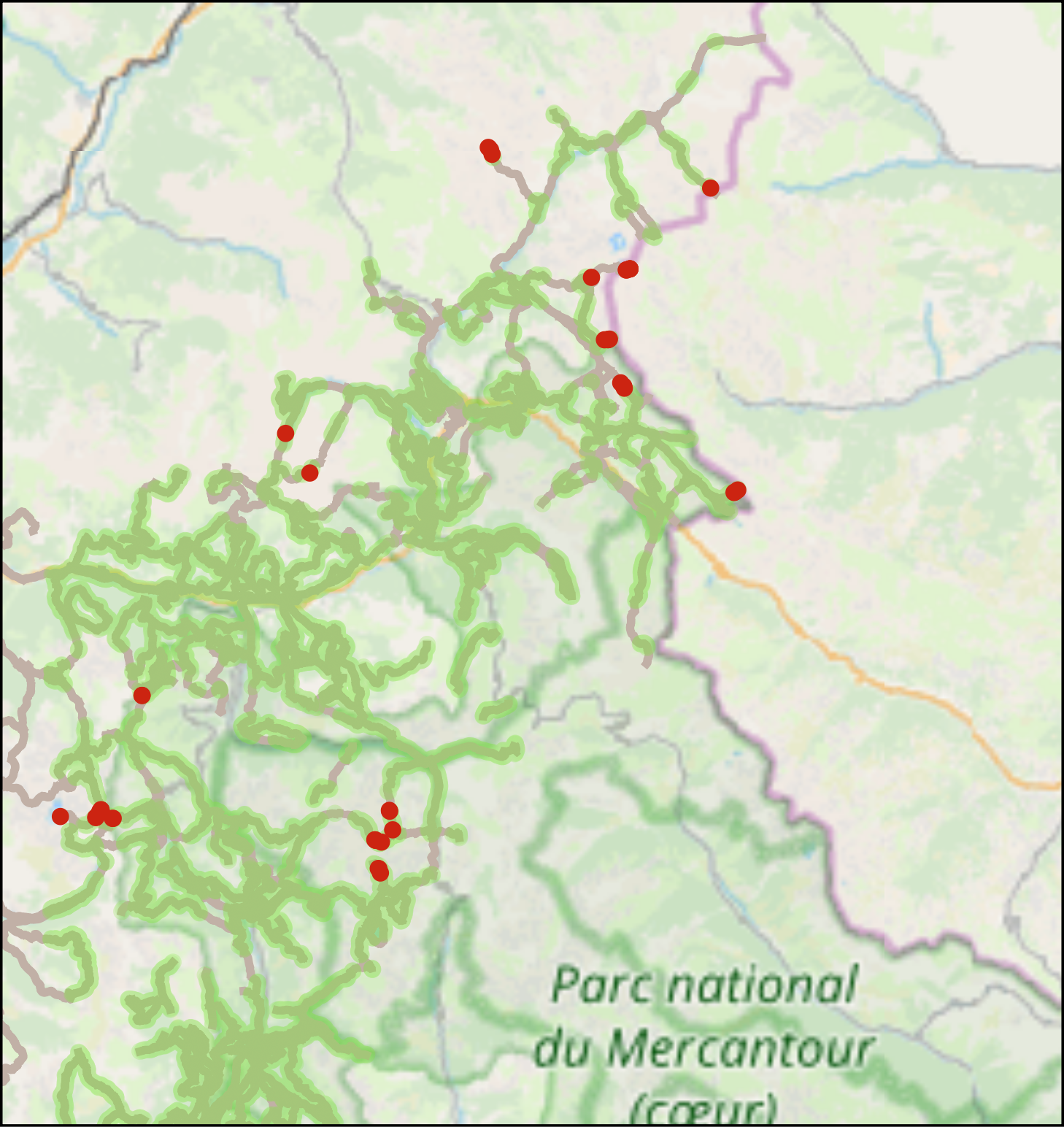
Geotrek software allows you to add external raster layers. To facilitate the development of this service, Theia should offer the distribution of snowmaking maps in the form of Cloud Optimized GeoTIFF. During this time the field team takes care of the validation!

Plus d'actualités

Autumn snow drought on Mount Damavand

« We are currently experiencing the driest autumn the country has experienced in 50 years » said Iran’s meteorological organisation. Near Tehran, Mount Damavand, the highest peak in Iran (5609 m) was reported to be « unusually bare of snow ». I checked this statement using my MODIS snow cover data processing algorithm implemented in Google Earth Engine (Gascoin […]

IOTA2 software mailing list

Hello everyone, We have just created a mailing list for users of the IOTA2 software (iota2 — iota2 documentation). The tool will undergo significant developments in the coming months, and the purpose of this list is to communicate with the community to support these changes and to maintain the processing workflows needed by the users. […]

Evolution des glaciers du Vignemale sous l’œil des satellites Pléiades (2013-2025)

Grâce à DINAMIS, un couple d’images stéréoscopiques a été acquis par Pléiades 1B le 14 septembre 2025. Le modèle numérique de surface (MNS) produit à partir de ces images peut être comparé à un autre MNS de septembre 2013 produit à partir des images Pléiades 1A commandées par Marti et al. (2014). Le glacier d’Ossoue […]

Rechercher