
Sex ratio at LPS16
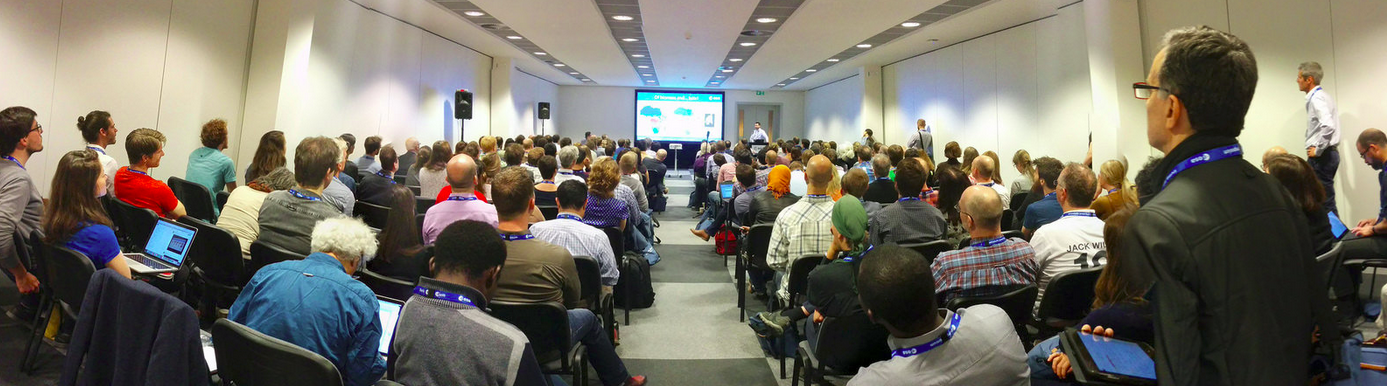
I did not have the chance to attend the latest ESA’s Living Planet Symposium so I was curious to read Olivier’s report. The picture in his post shows a crowded room… but what stroke me most is that it looks like 90% of the people in the room are middle-age men. There is no public data on the age or the sex of the participants to the LPS16. But there is a page on the LPS16 website listing all the authors.
I downloaded this page:$ wget http://lps16.esa.int/page_programme_authors.php Using a html parser one can extract the first names of each participant based on the fact that the first name and last name of each author are contained in the h2 tag:
$ hxselect -s '\n' -c 'h2' < page_programme_authors.php | uniq | cut -d, -f2 | cut -d ' ' -f2 > authors_firstname.csv
I had to pipe the output of hxselect to the uniq utility because some authors appear several times with different affiliations (for instance I counted five Jordi Ingladas in the author list). So I made the hypothesis that two different authors cannot have the same pair of {first name, last name}. The resulting list has 6931 authors (7383 if duplicates are not removed).
I found on the Internet the genderize API to easily determine the gender of a first name. The API is limited to a maximum of 10 names per request, so the API must be called in a loop to query more names. Also, the API is free, but limited to 1000 queries per day. This small python script prints the gender of the top first 999 authors in the list (I wasted one query to check that the API was working).
from gender import getGendersimport numpy as npfnames=np.genfromtxt('authors_firstname.csv',dtype='str').tolist()for i in range(len(fnames)/10): a=fnames[i*10:i*10+10] g=getGenders(a) print(g)Among the first 999 authors in the list, the genderize API finds 687 males, 261 females and 51 « unknown ». This corresponds to a sex ratio of 1 female to 2.6 males. In other words, 27% of the authors are women. According to UNESCO 28% of the world’s researchers are women.
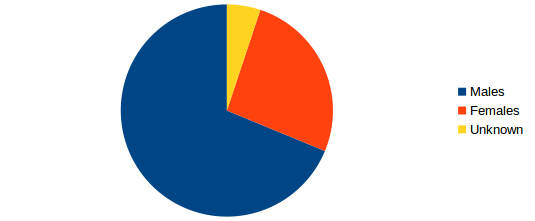
This is a very crude analysis of the gender balance since I did not account for transgender people. However, it seems that the gender balance at LPS16 was not as bad as I thought at first sight… But it could be better!