In Lamasquère, ROSAS has produced its first rosaces


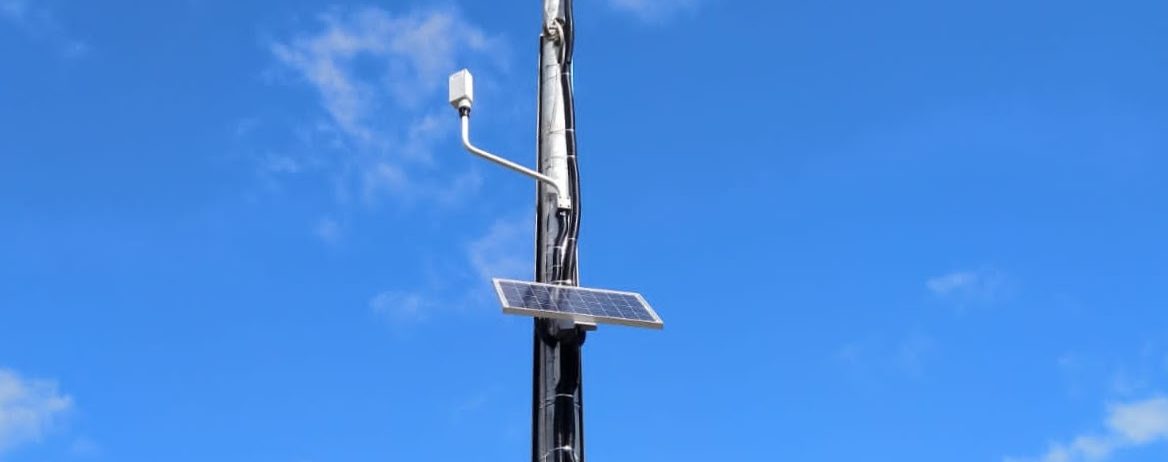
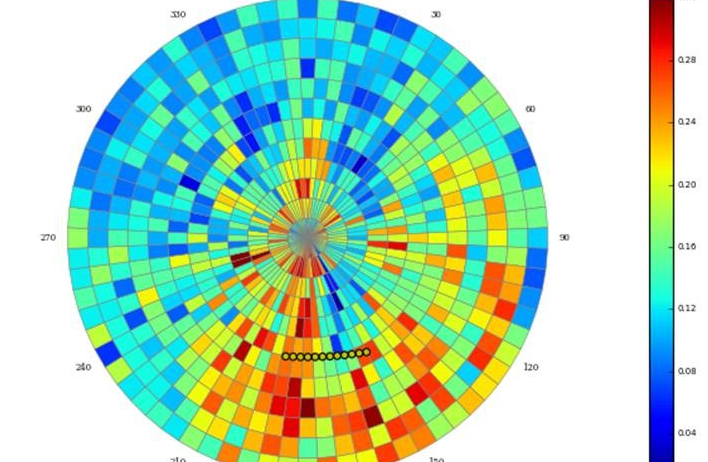
These space engineers are fast and efficient ! Just a week after our ROSAS station in Lamasquère was erected, we already have the first BRDF measurements, the producing of which required also the processing of calibration sequences. This was done thanks to our colleagues at CNES from the service in charge of measurement physics in optics, especially Lucas Landier, Sebastien Marcq and Aimé Meygret, and the exploitation team (Nicolas Guilleminot). Although the installation of the system has degraded the uniformity of the existing cover crop, the orders of magnitude of reflectances are as expected; and we can even see the shadow of the mast in the 120° azimuth direction in the top-left graph.

Let’s wait for the corn to be sown, and we should have much cleaner BRDFs.
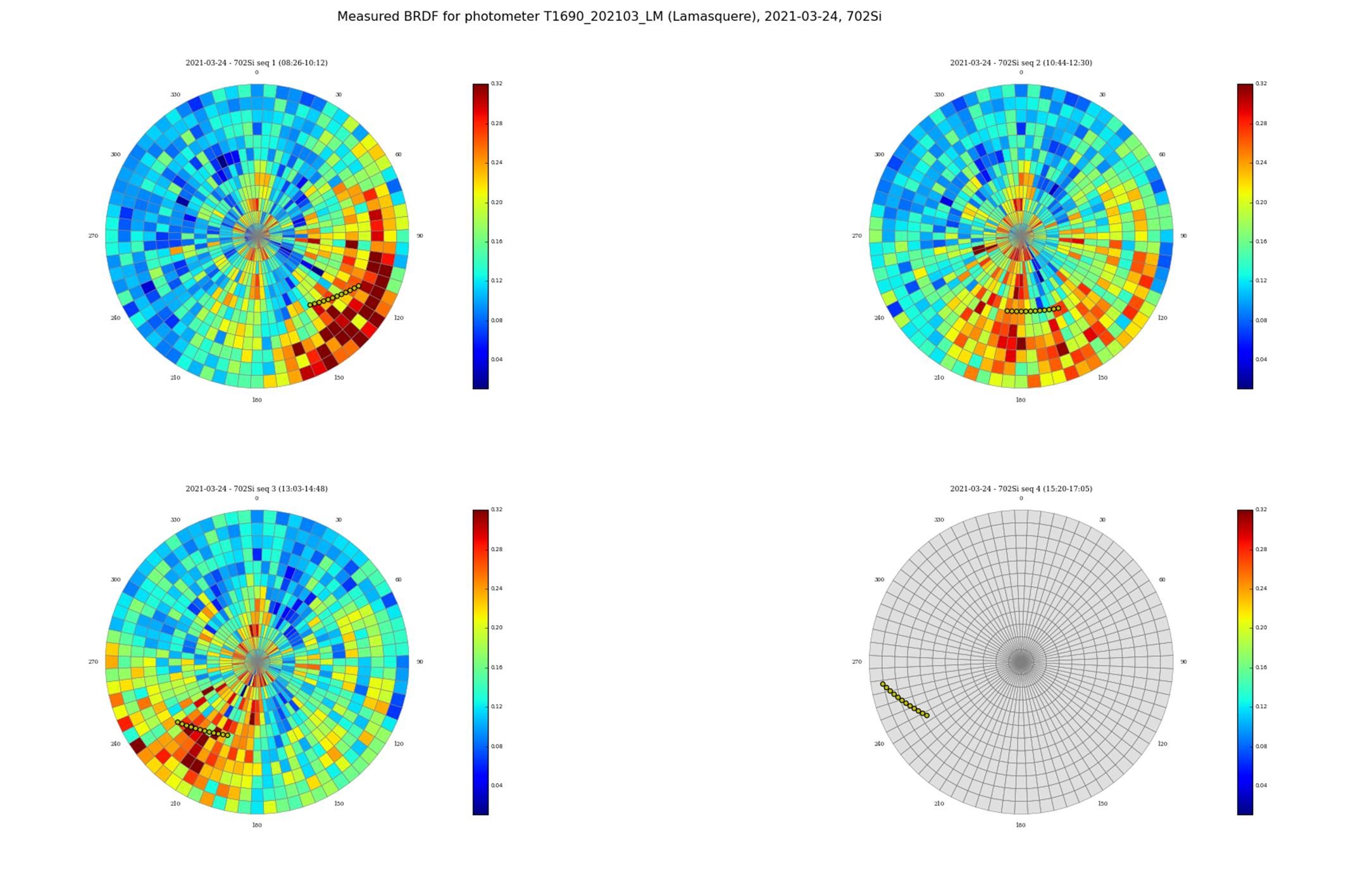
 

Polar diagrams of surface reflectances measured by our ROSAS station in Lamasquère. In this not very intuitive representation, the 0° azimut corresponds to observations towards the South.  The top left image was taken in the morning, the top right around noon, bottom left in the afternoon, and bottom right later on after the arrival of clouds. The yellow dots indicate the position of the sun. The radius of the graph corresponds to the zenith angle, and the other dimension is the azimuth with regard to the North.


Plus d'actualités

The missing link to valorize CESBIO’s applicative research works

=>  My colleagues at CESBIO are extremely creative! Over the past ten years, they have developed a wide range of new products and methods for extracting information from Copernicus data. They don’t just develop and validate the method on a few sites; they continue their work until they have produced data for the whole of […]

Sentinel-2 overtakes Landsat in scientific litterature

OpenAlex is a new, yet already very useful, open database for exploring scientific literature. For an upcoming blog post on the CNES Datacampus website, I analysed the proportion of papers that used only one of the Sentinel-2 or Landsat missions, as well as those that used both, in 2025. What struck me was that Sentinel-2 […]

IOTA2 software mailing list

Hello everyone, We have just created a mailing list for users of the IOTA2 software (iota2 — iota2 documentation). The tool will undergo significant developments in the coming months, and the purpose of this list is to communicate with the community to support these changes and to maintain the processing workflows needed by the users. […]

Rechercher