[MUSCATE News] Some bad and good news
The bad news
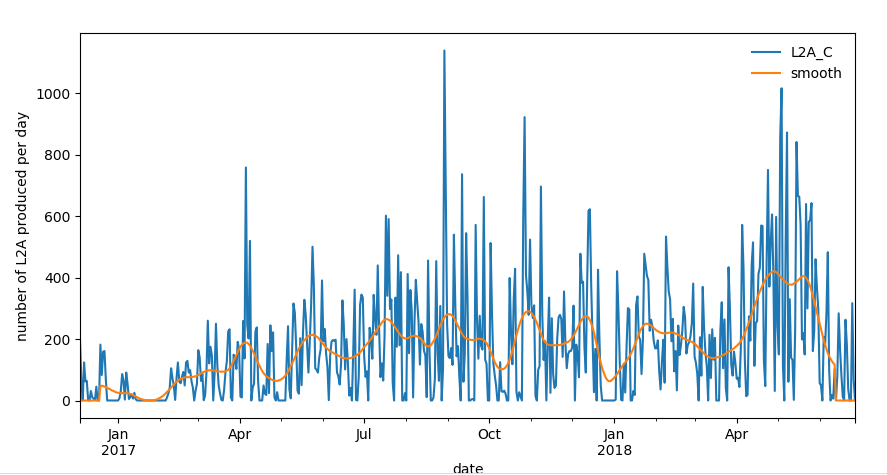
The MUSCATE ground segment that delivers Sentinel-2A products has had several issues these past two weeks. We have had some performance issues with the data base which tells MAJA processor which product must be processed next. These lower performances caused traffic jams and disruptions in the data production, and the system crashed quite frequently. Because of these crashes, our real time production of L2A and snow products has currently a delay above one week for most sites.The teams are working hard to find the roots of these issues and correct them. We are very sorry for the inconvenience this may cause to your applications with good Level2A data or snow products.
The good news : cirrus correction
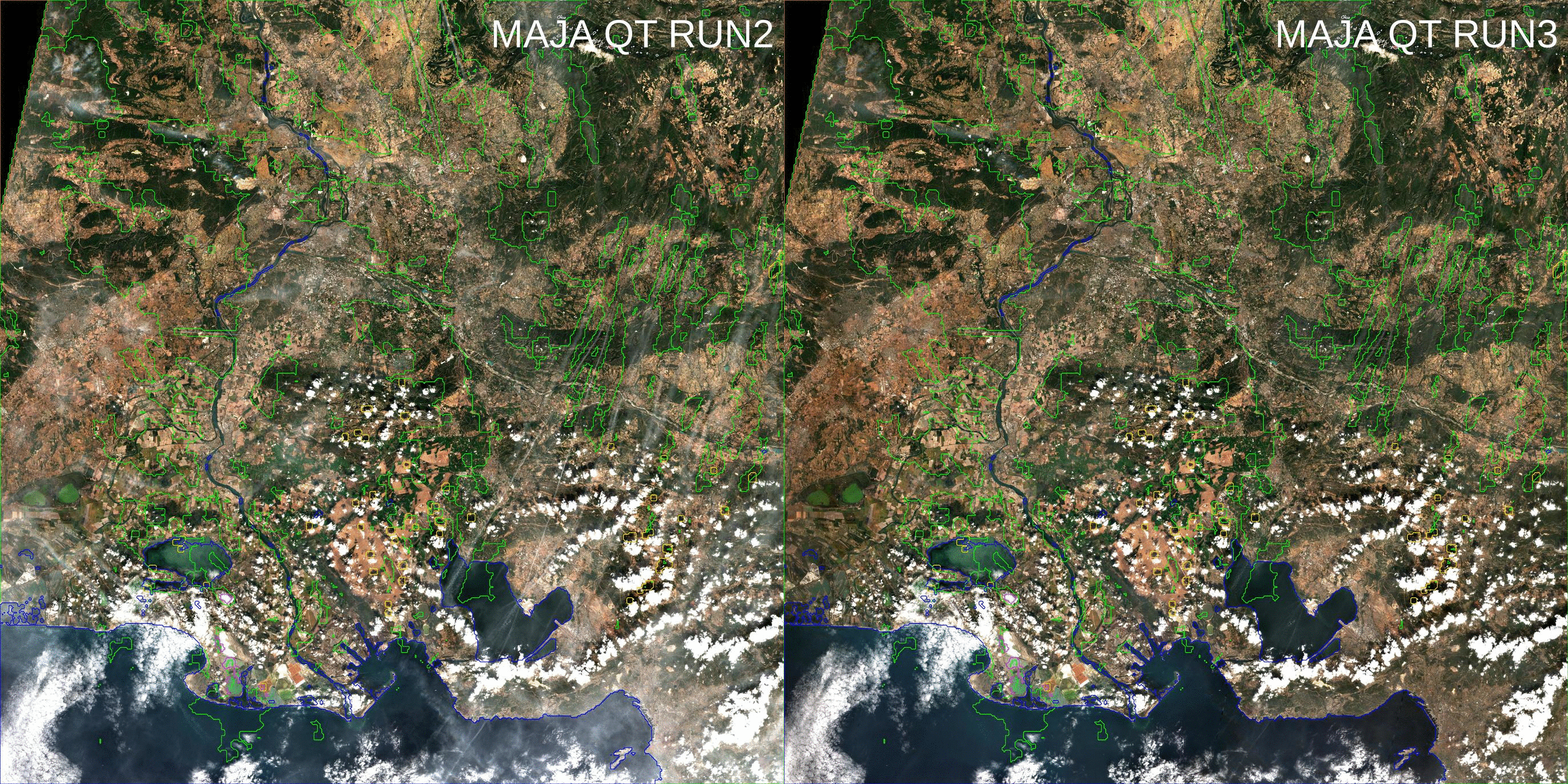
The Sentinel-2 Level 2A data which are being produced now have a new version number: version 1.8. The novelty with these products is the cirrus clouds correction which was implemented within MAJA thanks to our collaboration with DLR (the German aerospace agency) and thanks to ESA funding. The quality of the correction is generally good, but depends on the cirrus cloud thickness, and does not correct for the underlying shadow. As a result, we only apply the correction where a cirrus cloud has been detected, and we keep these pixels flagged as cloudy, even if the correction is good. For now, we advise you to use these pixels only after having checked visually the correction. If you are processing data automatically without any visual control, our advise is to go on discarding these pixels, except if you do not need a high accuracy.