Le glacier de l’Astrolabe s’apprête à vêler un bel iceberg

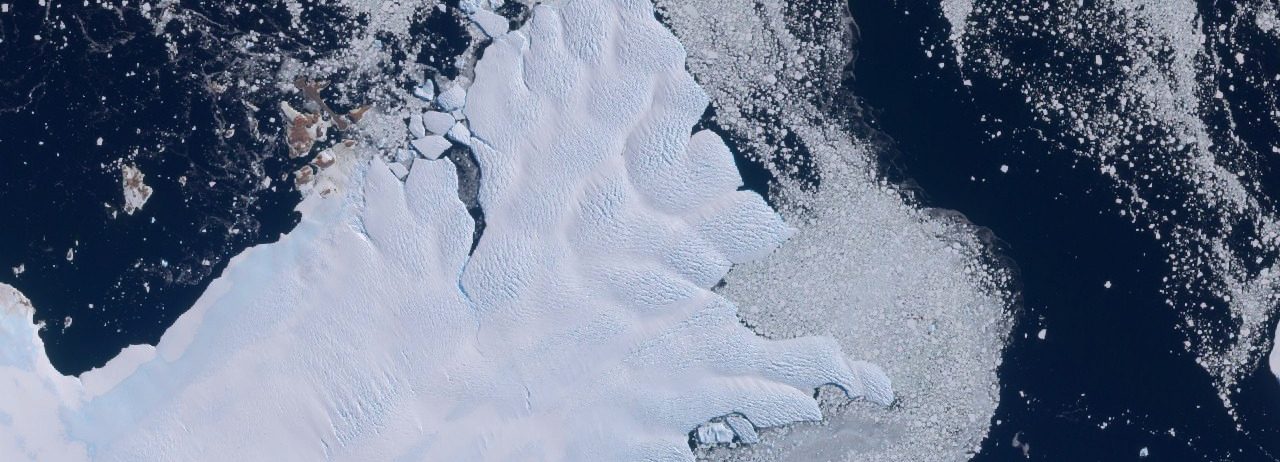
Sur une image Pléiades acquise le 15 janvier, Etienne a remarqué une fracture qui traverse une bonne partie de la langue du glacier de l’Astrolabe auprès de la base Dumont-d’Urville en Antarctique.

On peut reconstituer l’ouverture de cette crevasse à partir d’une série d’images Sentinel-1 (une année complète de janvier 2020 à janvier 2021)

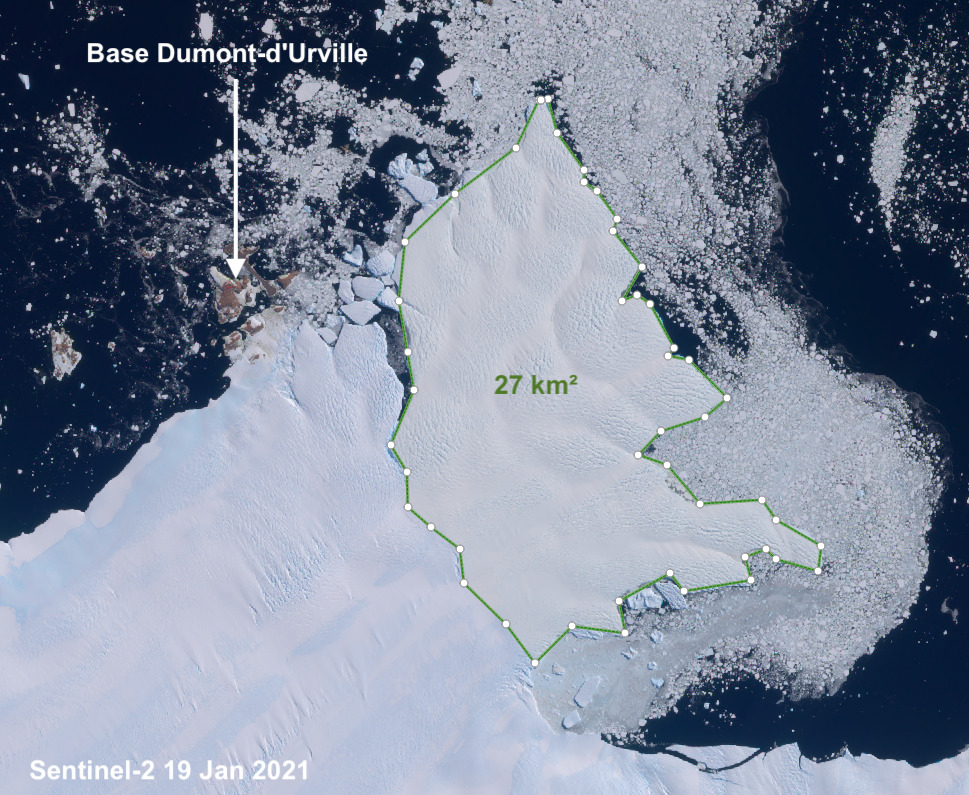
D’après la dernière image Sentinel-2 disponible, l’iceberg en couveuse pourrait avoir une superficie de 27 kilomètres carrés soit 4 000 terrains de football, ce qui est vaste mais beaucoup moins que l’iceberg A68 qui mesurait 5 800 km2 au moment de sa séparation avec la plateforme de glace Larsen C !
Le vêlage pourrait prendre encore du temps. Un iceberg à suivre donc…


Plus d'actualités

The missing link to valorize CESBIO’s applicative research works

=>  My colleagues at CESBIO are extremely creative! Over the past ten years, they have developed a wide range of new products and methods for extracting information from Copernicus data. They don’t just develop and validate the method on a few sites; they continue their work until they have produced data for the whole of […]

Le chaînon manquant dans la valorisation des travaux de recherche en télédétection

=> Mes collègues du CESBIO sont très créatifs ! Ils ont mis au point, au cours des dix dernières années, un grand nombre de nouveaux produits et de méthodes d’extraction de l’information à partir des données Copernicus (Sentinel-1 et 2). Et bien souvent, ils ne s’arrêtent pas à la mise au point de la méthode […]

Sentinel-2 overtakes Landsat in scientific litterature

OpenAlex is a new, yet already very useful, open database for exploring scientific literature. For an upcoming blog post on the CNES Datacampus website, I analysed the proportion of papers that used only one of the Sentinel-2 or Landsat missions, as well as those that used both, in 2025. What struck me was that Sentinel-2 […]

Rechercher