Impact of the August 12, 2026 eclipse on photovoltaic electricity generation in Spain

Photovoltaic (PV) energy supplies more 20% of Spain’s total electricity, and this share hit a new high in July 2026 (28.3% of the nation’s monthly electricity mix). Some media outlets were concerned about the drop in photovoltaic power generation during the 12-Aug-2026 eclipse. Le Monde explained that « the drop is expected to be particularly pronounced in Spain—a major producer of photovoltaic energy—where, for less than two minutes, the Moon will completely obscure the Sun in the north of the country. »
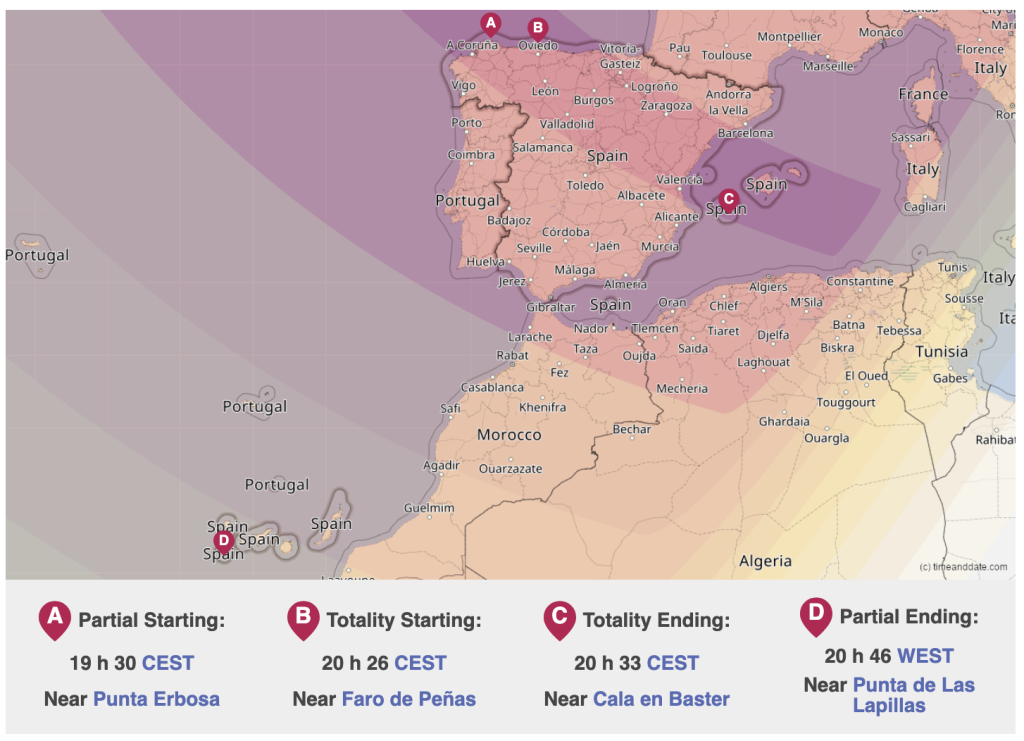
In Spain, the eclipse started at 19:30 CEST in Galicia (local time, i.e. 17:30 UTC) and ended at 20:46 CEST in the Canary Islands. The total eclipse could be observed from 20:26 to 20:33 in the northern part of the country. During that period of the day, the PV production is surely low, but the Sun was still about 10° above the horizon… Can we detect the impact of the eclipse?
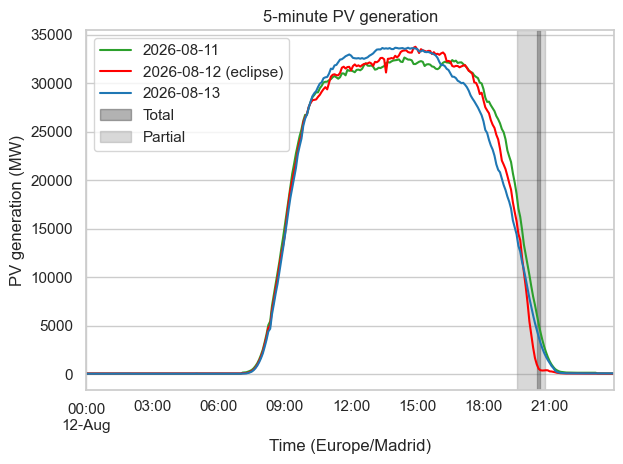
I fetched the data published by Red Eléctrica de España, the corporation which operates the national electricity grid in Spain. The plot below shows the PV generation in Spain at 5-min intervals on the day of the eclipse, the day before and the day after. The three curves look similar as the sky was mostly cloud-free over Spain during this 3-day period. However, one can see a drop on Aug 12, during the eclipse.
This difference is actually significant, reaching a loss of 4541 MW at 20:20 CEST.
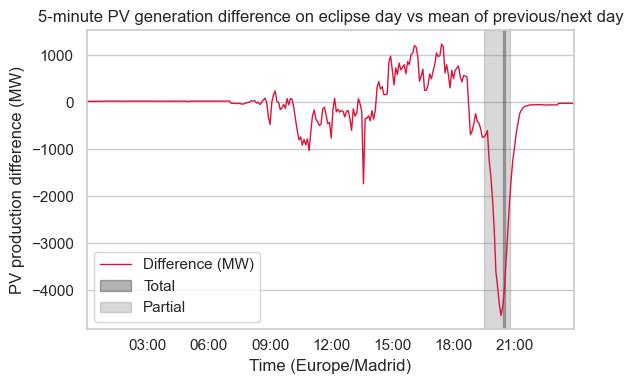
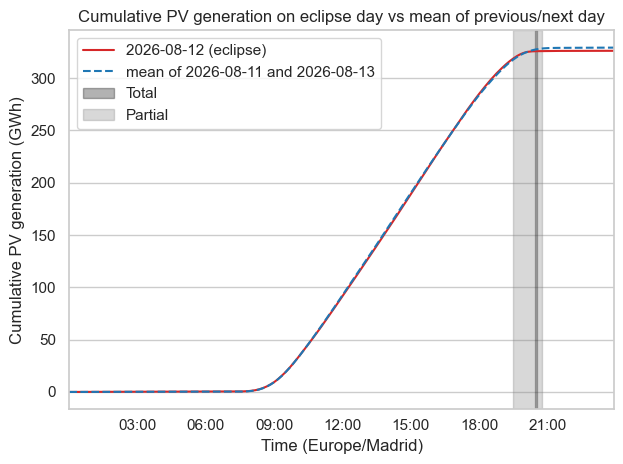
The drop is noticeable, but it did not last long. In the end of the day, the difference is not significant if we consider the total daily production (graph below). But there remains a small difference that was probably created by the eclipse!
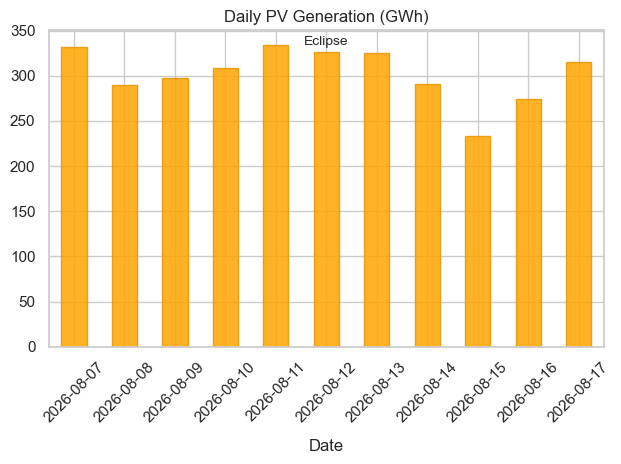
By expanding the time window to 5 days before, and 5 days after the eclipse, we can verify that this difference is negligible with respect to the day-to-day variations due to the weather.
The code to reproduce this analysis is available here: https://gist.github.com/sgascoin/178962adaedc74fe6b86ea3e6b212d28
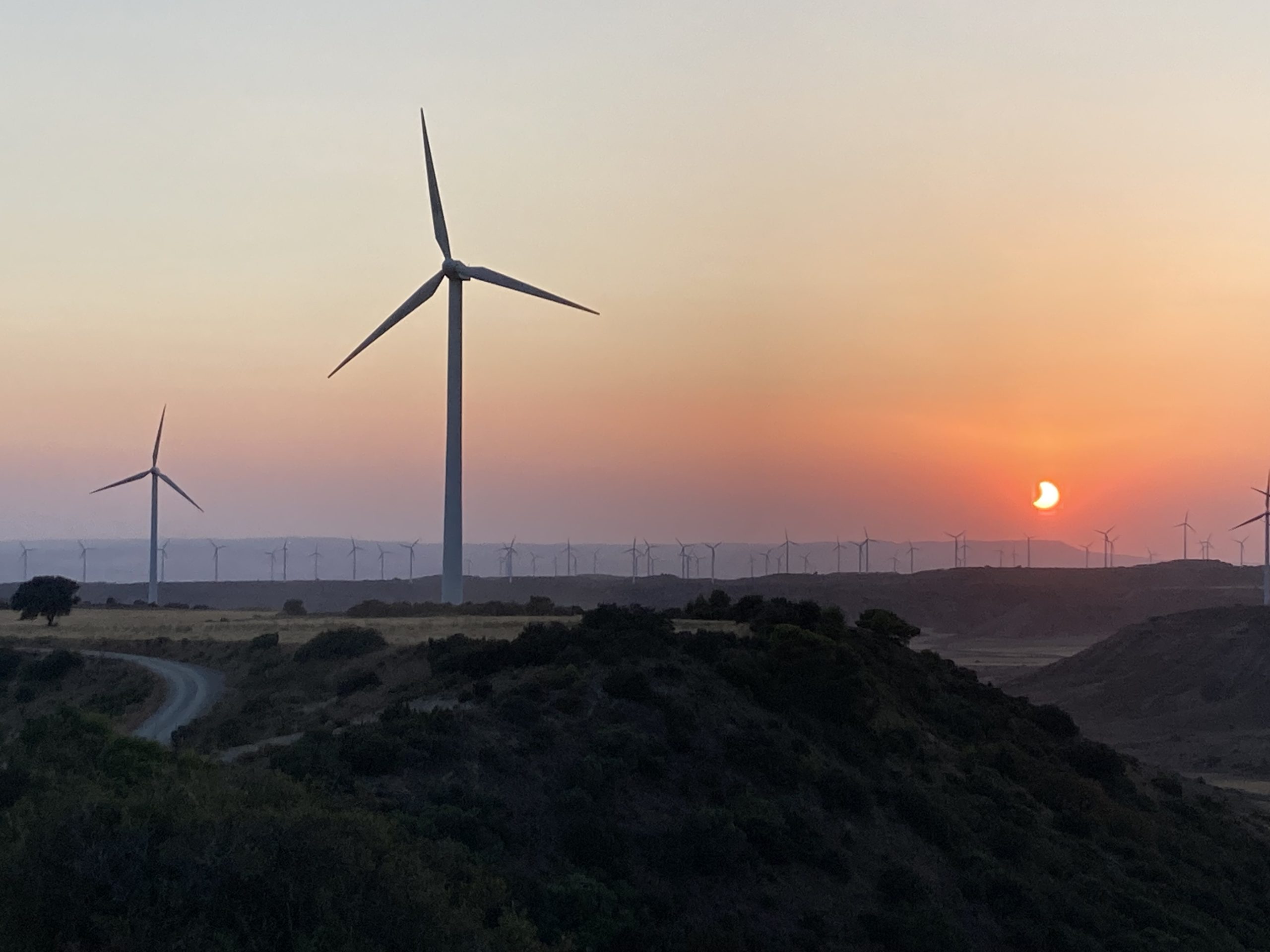
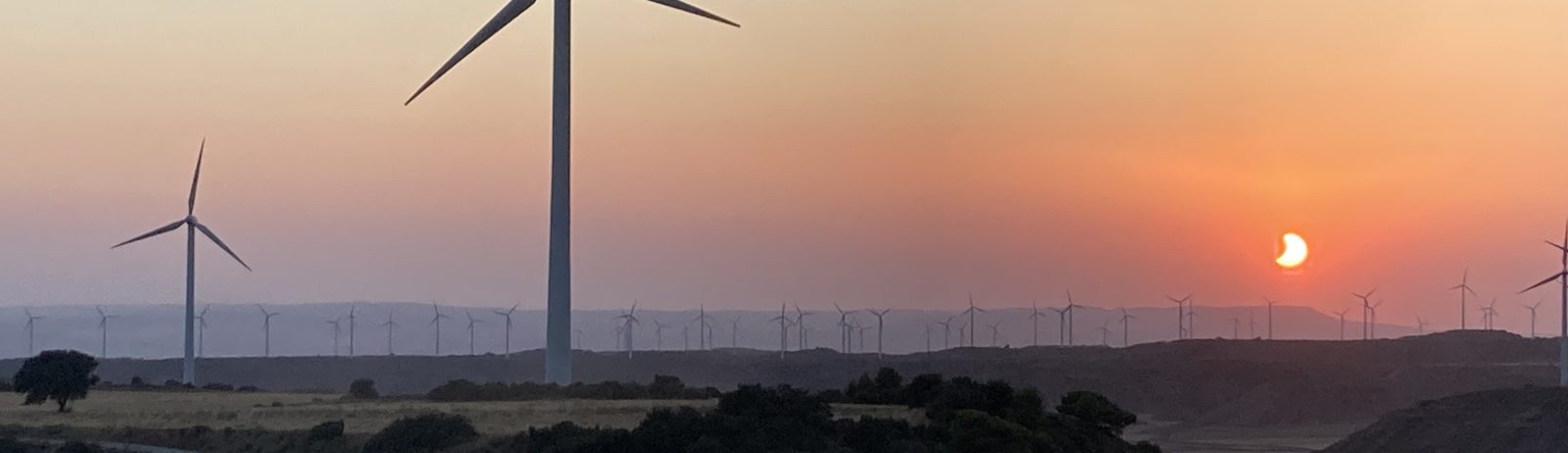
PDPS (Proud Dad Post-Scriptum): My son captured this time lapse of the landscape during the eclipse from our observation spot near Huesca, Spain. Do you realize the effort it takes for a teenager to put down his smartphone for more than an hour?