
Geomystery near Mount Everest
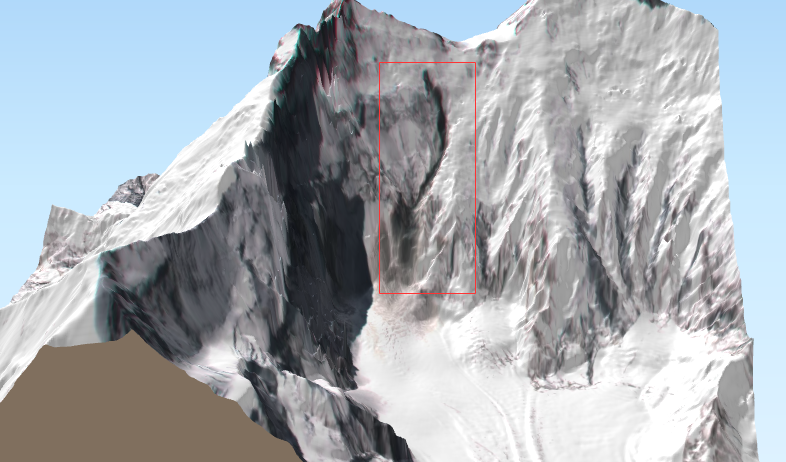
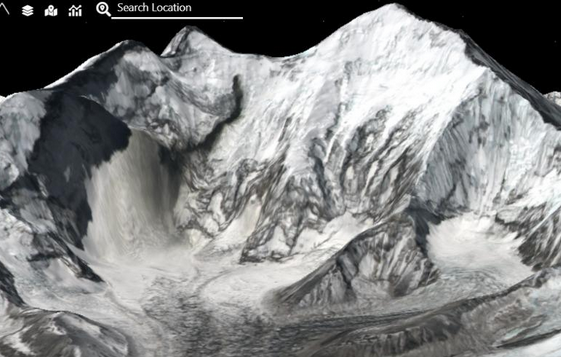
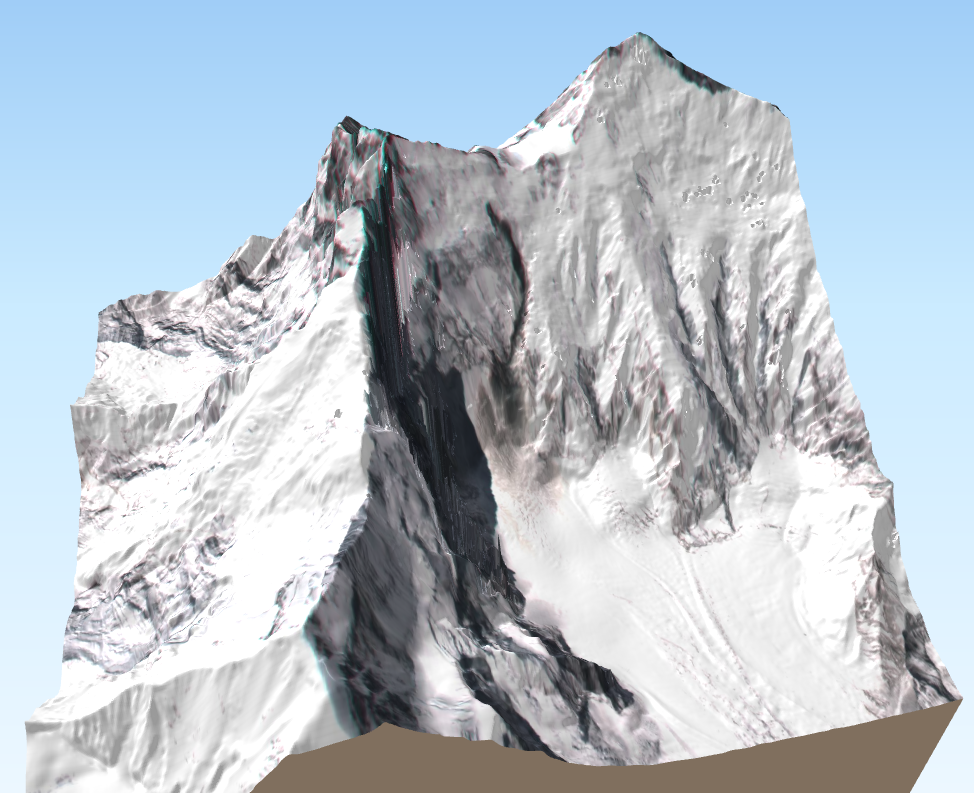
I noted a curious dark trace on the steep slope below South Col between Mount Everest and Lhotse in this 3D view of a Sentinel-2 image (2019 Mar 29)…
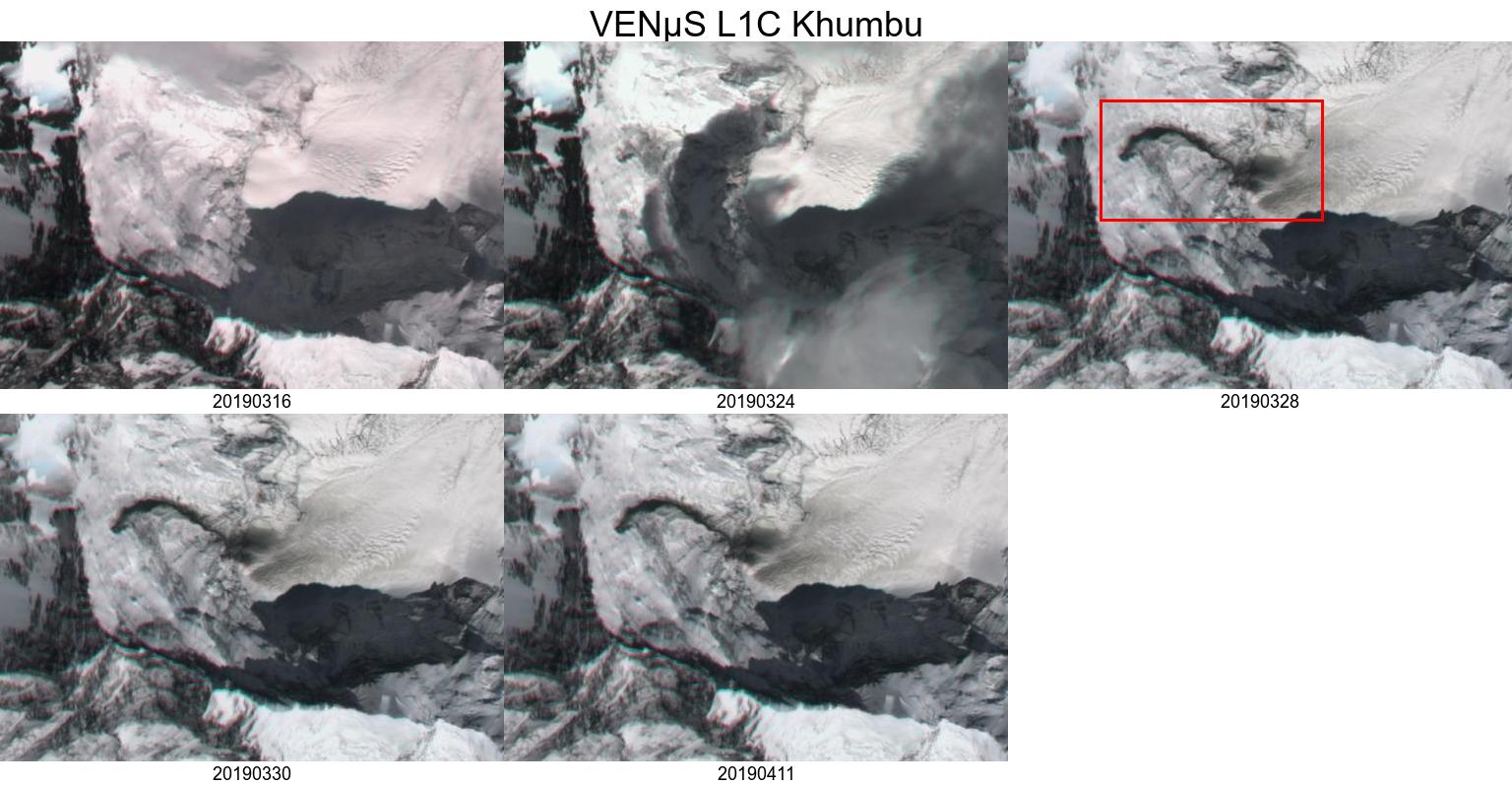
The dark thing is visible in the Venµs Khumbu time series (5 m resolution). It shows that it appeared between 24 and 28 March 2019. It is about 1.3 km long. Click on the picture below to enlarge.
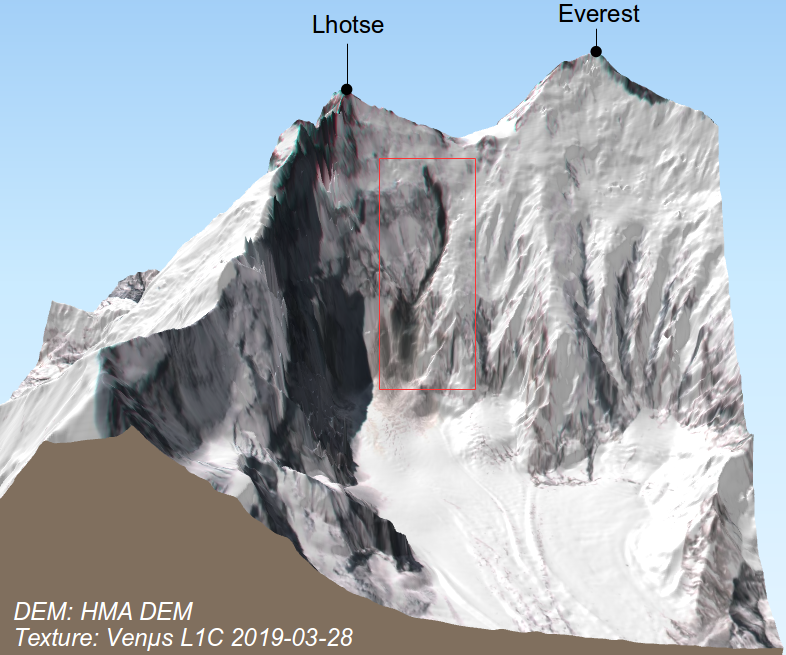
 After a quick correction of the Venµs image geolocation [1], I made some 3D views using Qgis2threejs and the HMA DEM (8m resolution):
Footnote
[1] Be careful the orthorectification of Venµs images is a bit shaky in this steep area. Here I collected five control points using the hillshaded HMA DEM as a reference and warped the image using a thin plates spline transform in QGIS. The average shift between source and target points was close to 500m! This allowed me to make a quick correction of the main horizontal distortion for this post but there probably remain large errors in the image geolocation.