For your eyes only, New Caledonia monthly cloud free synthesys.

=>

I will probably never go to New Caledonia, as the plane trip would spoil my carbon budget for the next 10 years. But I just had the chance to admire it from 700 km above sea level, thanks to the monthly Level 3A cloud free syntheses produced by Theia with Sentinel-2 data. As I am not selfish, here is a link to visualize the mosaic of these images obtained for the month of August 2019. For once, I made the mosaic at 10 meters resolution, and it’s worth it.

If you look closely, you will find some artefacts on this cloudy region, but most of them are above water, and sadly over the magnificent lagoon. Our method has been designed to work on lands, but is somewhat degraded above water becuase water colours change very fast with time. to know more about our methodology please see this post.
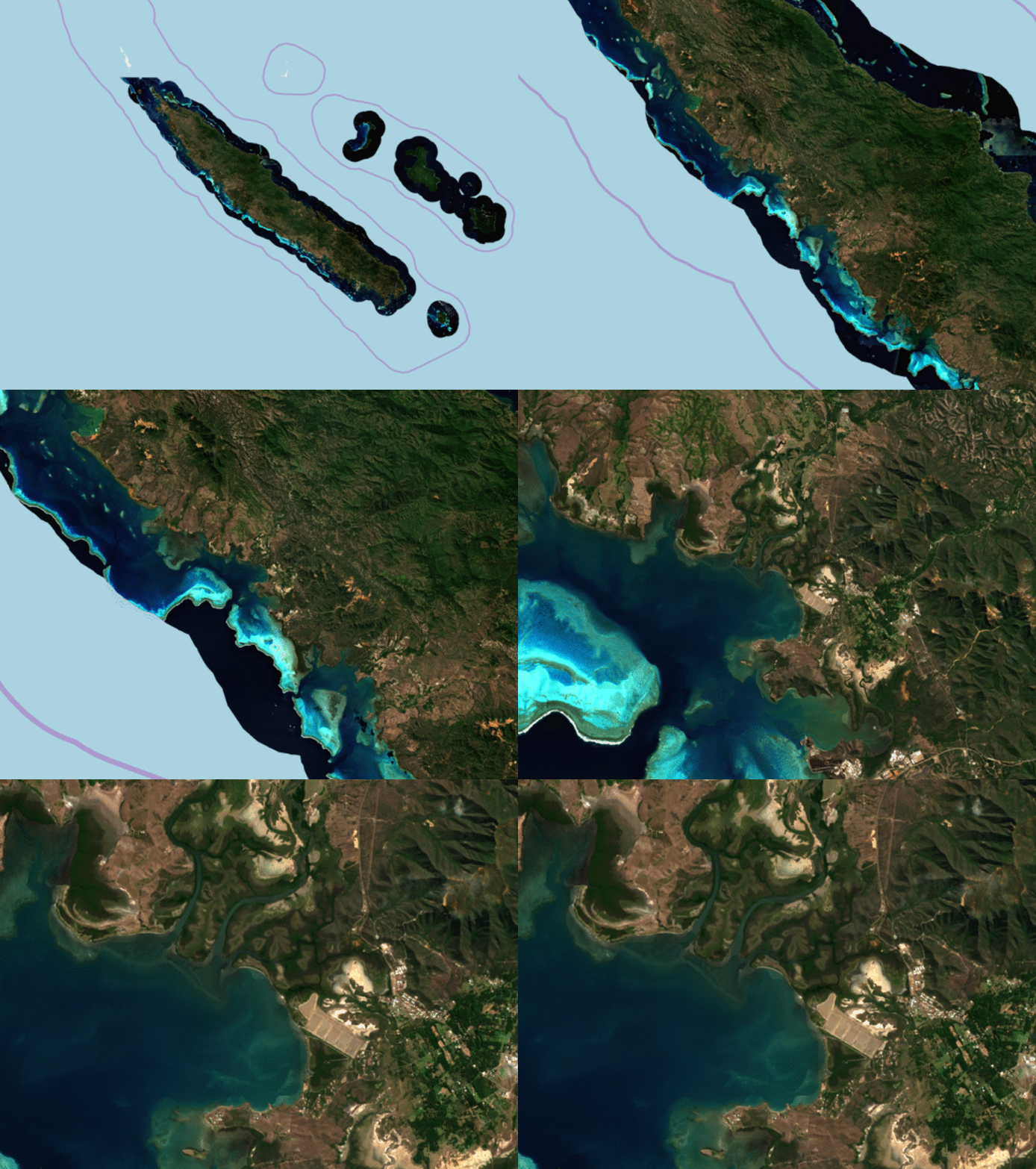
 

A little zoom on the Heart of Voh


To start visiting New Caledonia, click on the image below. I am taking the risks to make you want to go to New Caledonia, but, I will not accept to take charge of your carbon budget.
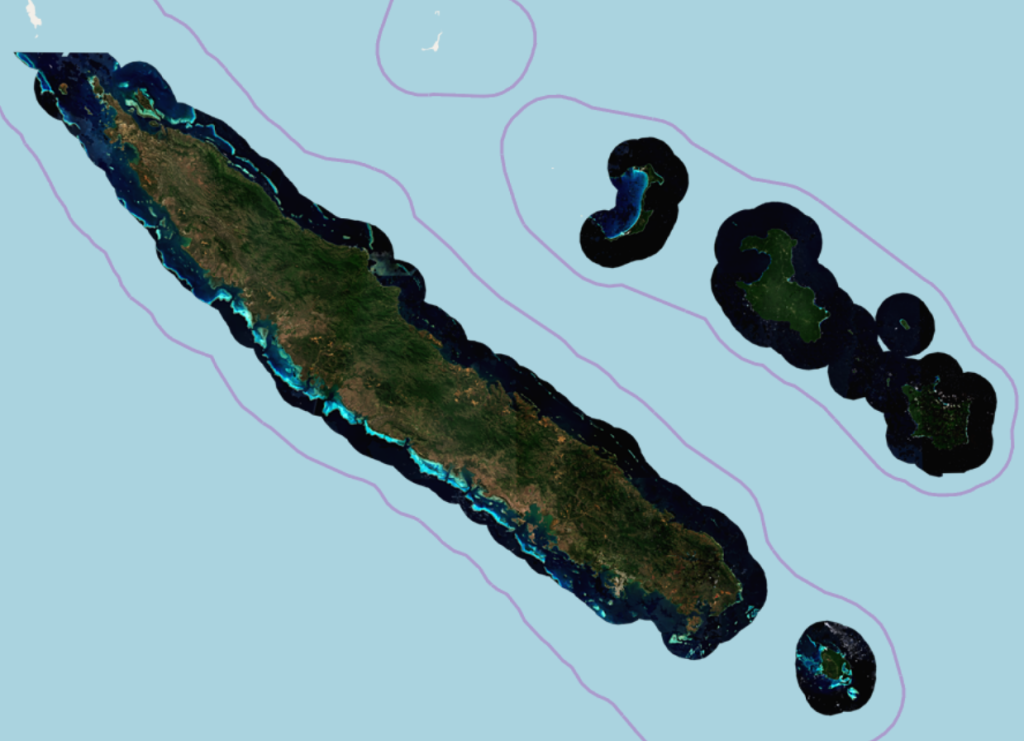
Cliquez sur l’image pour visiter la Nouvelle-Calédonie


Crossing New Caledonia from West coast to East coast

Plus d'actualités

The missing link to valorize CESBIO’s applicative research works

=>  My colleagues at CESBIO are extremely creative! Over the past ten years, they have developed a wide range of new products and methods for extracting information from Copernicus data. They don’t just develop and validate the method on a few sites; they continue their work until they have produced data for the whole of […]

Le chaînon manquant dans la valorisation des travaux de recherche en télédétection

=> Mes collègues du CESBIO sont très créatifs ! Ils ont mis au point, au cours des dix dernières années, un grand nombre de nouveaux produits et de méthodes d’extraction de l’information à partir des données Copernicus (Sentinel-1 et 2). Et bien souvent, ils ne s’arrêtent pas à la mise au point de la méthode […]

Sentinel-2 overtakes Landsat in scientific litterature

OpenAlex is a new, yet already very useful, open database for exploring scientific literature. For an upcoming blog post on the CNES Datacampus website, I analysed the proportion of papers that used only one of the Sentinel-2 or Landsat missions, as well as those that used both, in 2025. What struck me was that Sentinel-2 […]

Rechercher