Nouvelles de MUSCATE / MUSCATE news
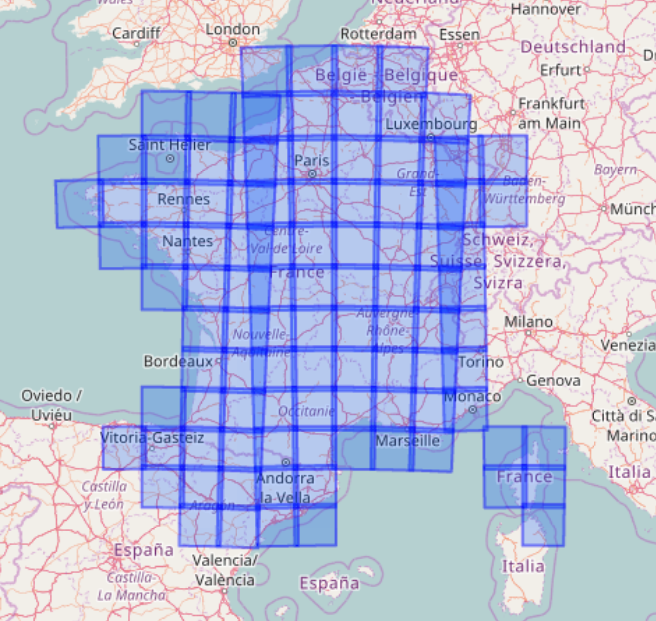
 Depuis que le nouveau cluster du CNES a été installé, le centre de production MUSCATE a fonctionné de manière régulière, avec un rythme de production de 100 tuiles Sentinel-2 traitées au Niveau 2 par jour. Nous sommes encore loin de la pleine vitesse :, il faudra d’une part encore quelques mises à jours pour que le système soit plus robuste, et d’autre part que le nouveau centre de calcul du CNES termine sa phase de rodage car il tourne tourne encore assez lentement. Cependant, la production des données sur la France, la Belgique, les Pyrénées, le bassin de l’Ebre et la Catalogne en Espagne devrait se terminer ce week-end et les données seront ensuite poussées verts le serveur de distribution dans le courant de la semaine prochaine. Les nouvelles données porteront la version V1_1. Nous démarrerons par la suite la production des données de trois nouvelles zones, au Maroc, en Tunisie et au Burkina Faso. Quant au traitement en temps réel, il nous faut attendre la validation de la modification qui permet de gérer le nouveau format de données Sentinel-2, mis en place le 4 décembre. C’est pour très bientôt !
  Since the new CNES cluster has been installed, the MUSCATE production rate has been steady, around 100 products per day. This is not full speed, as MUSCATE still needs a few updates to be more robust and can’t still be used at full capacity, and as the CNES cluster is in its tuning phase and is often running quite slow. However, the production of all data above France, Belgium, and North of Spain (Pyrenees, Ebro basin, Catalonia) should be completed this week-end and pushed to the distribution server next week. The new products will have version number V1_1. This version brings mainly a few bug corrections, regarding the cloud shadows for instance. Then we will proceed with 3 other zones ; Burkina, Morocco and Tunisia. To start real time production, we are waiting for the end of validation of the adaptation to the new format of Sentinel-2 data, which started to be used of the 4th of December 2017. It’s nearly ready !