Lowest snow cover area in the Alps since 2001

On March 2nd, the snow cover area in the Alps has reached its lowest value since 2001. Only 43% of the alpine range was covered by snow (about 82’000 square kilometers), whereas the average is 63% on the same day over the period 2001-2021. The deficit in the number of snow covered days (map below, computed from 01 November) is particularly evident in the Italian Alps.
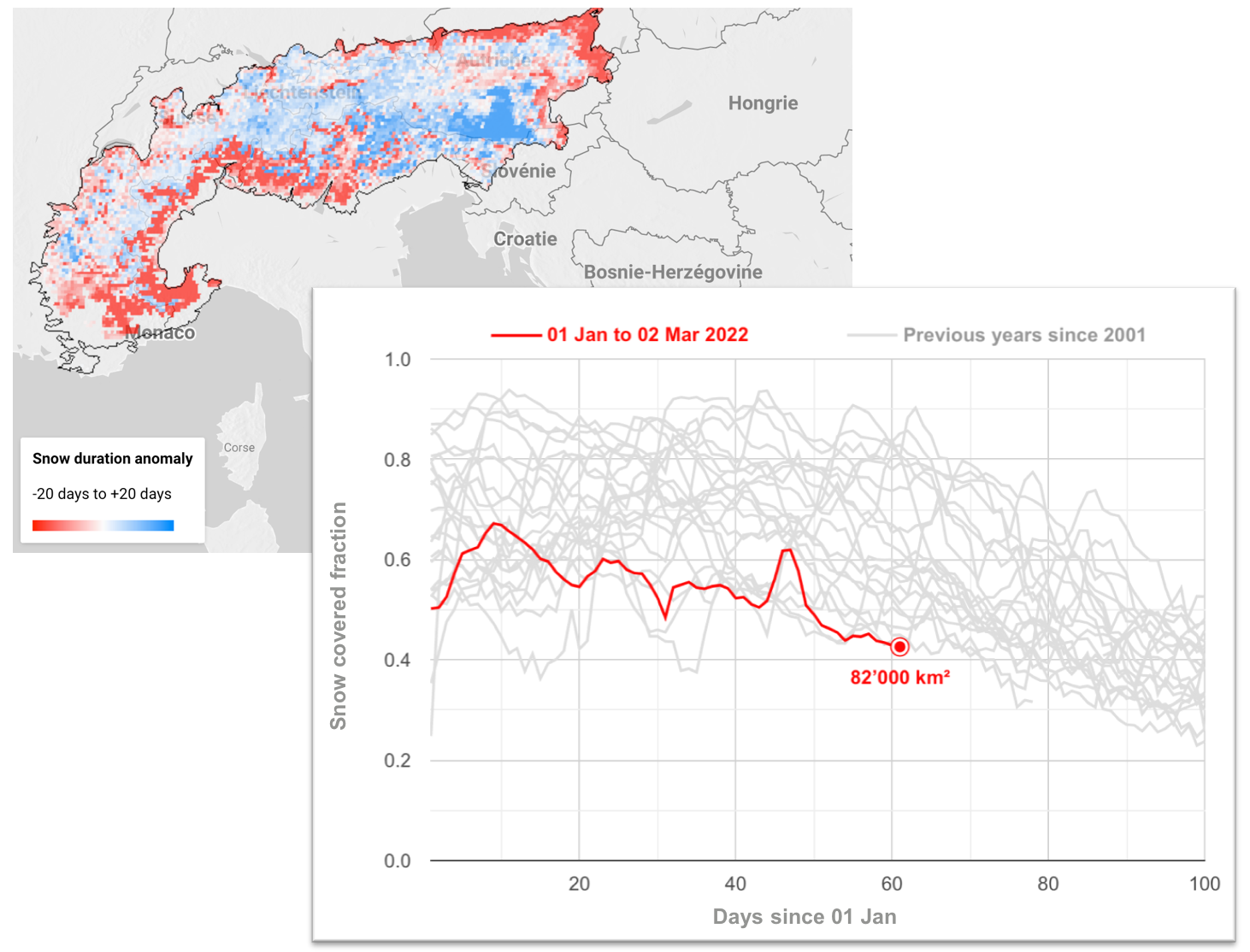
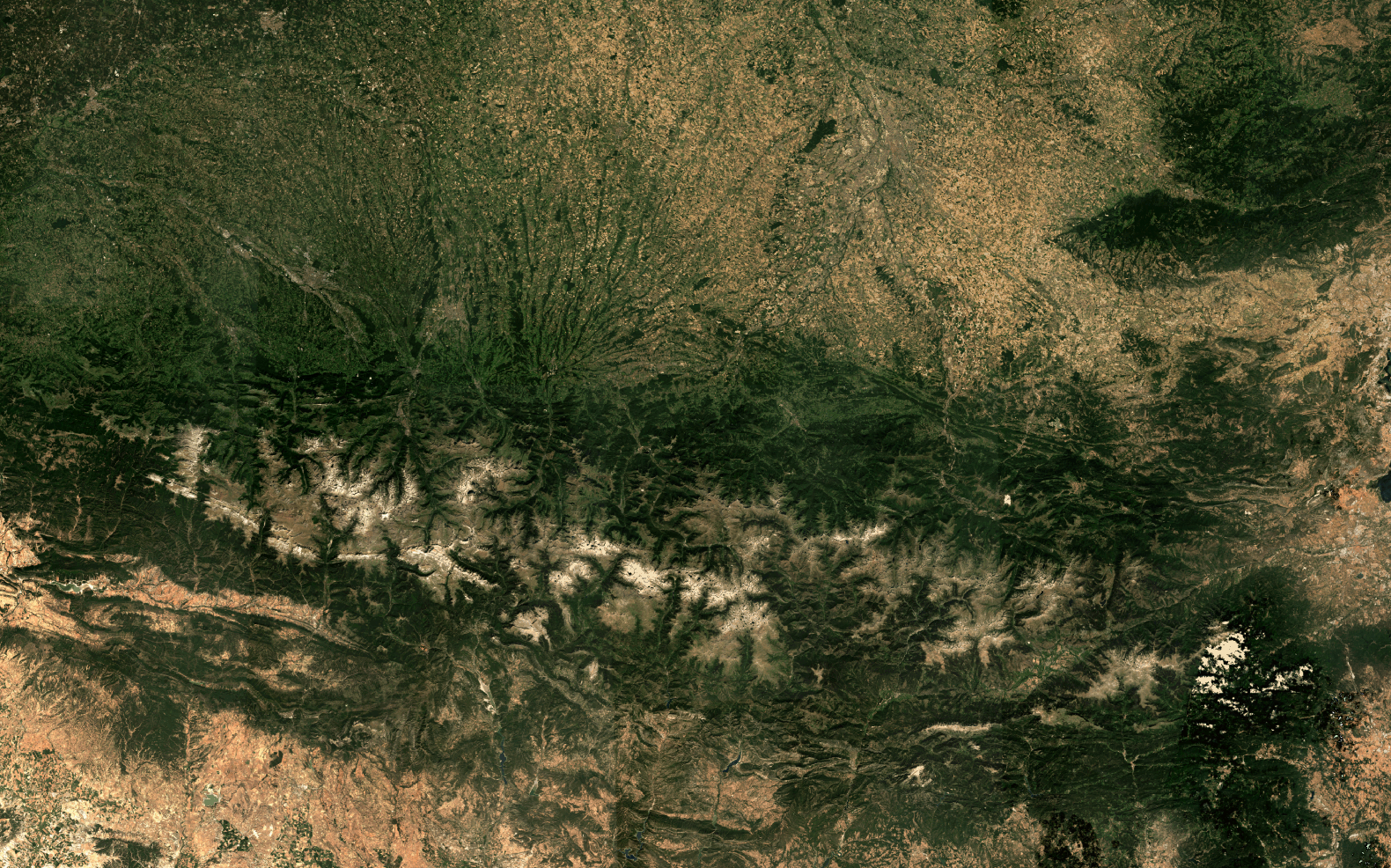
The current conditions contrast with the beginning of the season when early snowfalls covered almost 90% of the entire alpine range. But a « warm December » and a « dry January » have changed the situation. The situation is similar in the Pyrenees.

These data are generated from Nasa Terra/MODIS observations. You can follow the evolution of the snow cover area in near real time through our Alps Snow Monitor.

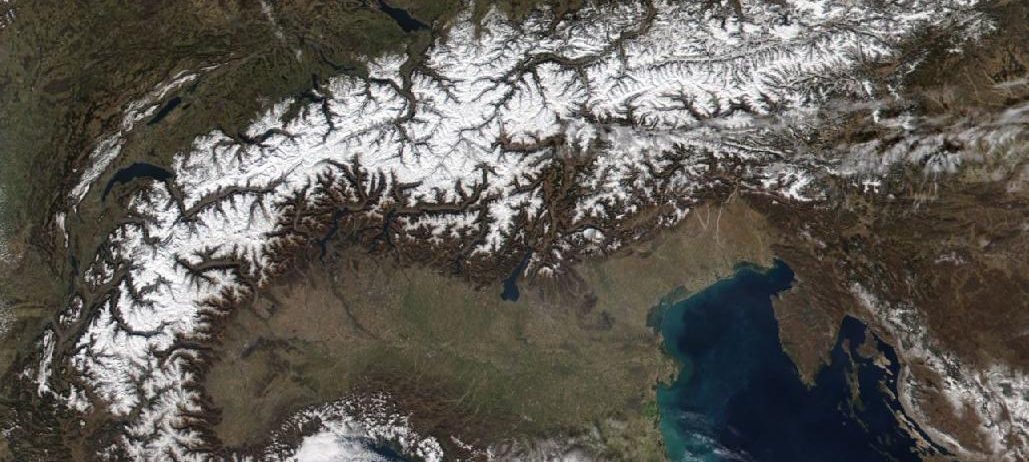
Top picture: MODIS image of the Alps on 03 March 2022.

Plus d'actualités

Near real time snow cover maps in the Copernicus Browser!

Copernicus provides near real time snow cover maps at 20 m resolution (fractional snow cover, code name: FSC OG). These products have been recently reprocessed and are now available through the Copernicus Data Space Ecosystem (CDSE) API and visualization tool, the Copernicus Browser! The latter is very useful to explore the data, for example if […]

Suivi du manteau neigeux dans les parcs naturels des Alpes franco-italiennes

Dans les Alpes, le manteau neigeux est un stock d’eau saisonnier naturel dont dépendent la faune, la flore et les humains pour de multiples usages (refuges, bétail, etc.). Dans le cadre du projet ACLIMO financé par le programme européen Interreg ALCOTRA, le Cesbio a été sollicité pour mettre en oeuvre un outil d’estimation de l’équivalent […]

The missing link to valorize CESBIO’s applicative research works

=>  My colleagues at CESBIO are extremely creative! Over the past ten years, they have developed a wide range of new products and methods for extracting information from Copernicus data. They don’t just develop and validate the method on a few sites; they continue their work until they have produced data for the whole of […]

Rechercher