Watching snow melt at 10 minute intervals from space

This is something new to me…

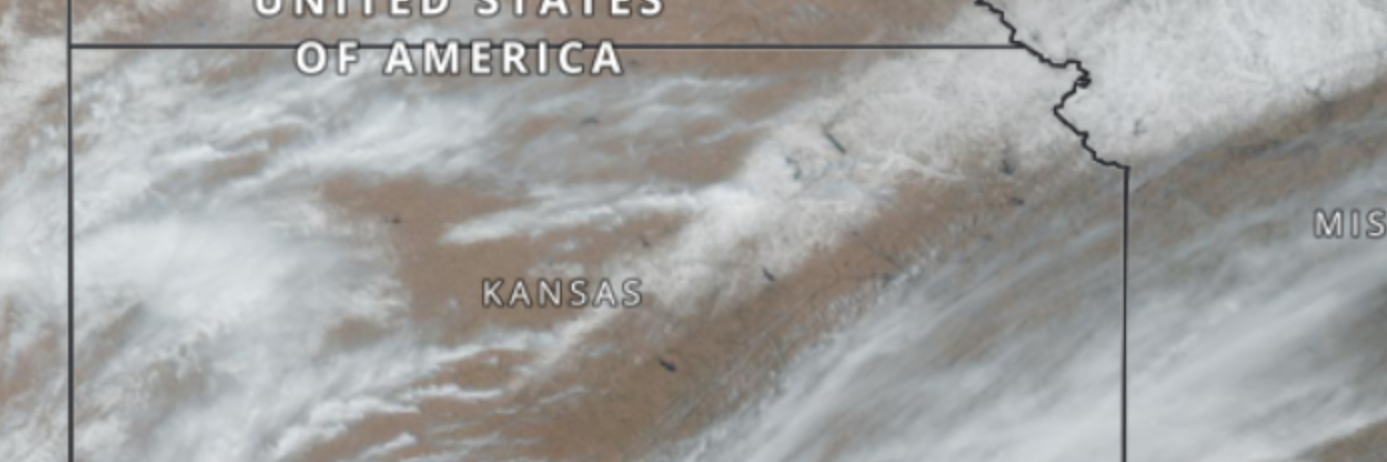
The Geostationary Operational Environmental Satellites (GOES) capture images every 10 minutes at 1 km resolution over America… Such imagery makes it possible to watch the quick melt of a thin snow cover over the US Great Plains during a single day.

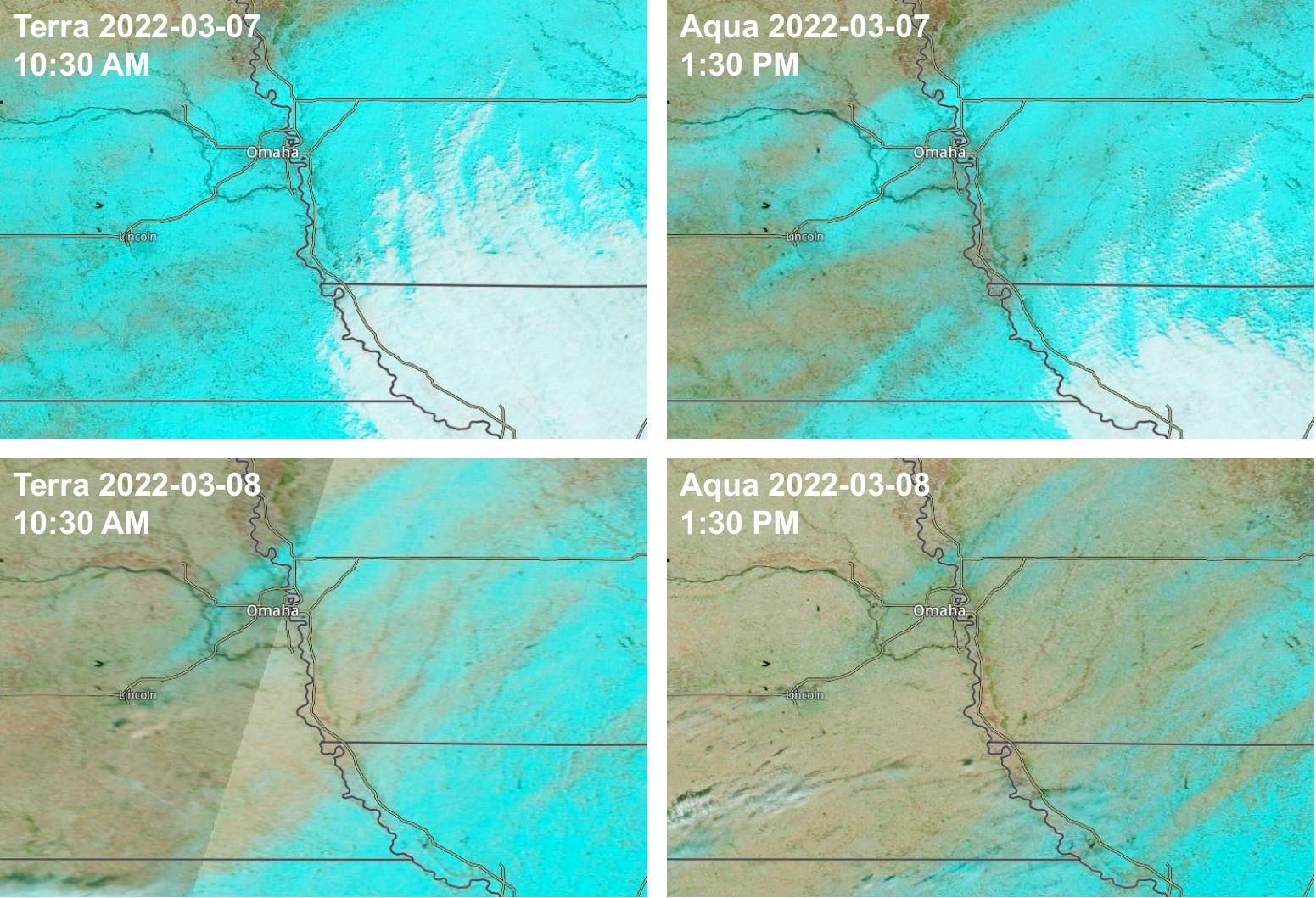
Sub-daily monitoring of the snow cover at such spatial resolution was already possible by combining Aqua and Terra observations (overpass times of 10:30am and 1:30 pm). Here is the same example zoomed in near Ohama, Nebraska (snow cover in blue, clouds in white):
 

Plus d'actualités

Suivi du manteau neigeux dans les parcs naturels des Alpes franco-italiennes

Dans les Alpes, le manteau neigeux est un stock d’eau saisonnier naturel dont dépendent la faune, la flore et les humains pour de multiples usages (refuges, bétail, etc.). Dans le cadre du projet ACLIMO financé par le programme européen Interreg ALCOTRA, le Cesbio a été sollicité pour mettre en oeuvre un outil d’estimation de l’équivalent […]

The missing link to valorize CESBIO’s applicative research works

=>  My colleagues at CESBIO are extremely creative! Over the past ten years, they have developed a wide range of new products and methods for extracting information from Copernicus data. They don’t just develop and validate the method on a few sites; they continue their work until they have produced data for the whole of […]

Le chaînon manquant dans la valorisation des travaux de recherche en télédétection

=> Mes collègues du CESBIO sont très créatifs ! Ils ont mis au point, au cours des dix dernières années, un grand nombre de nouveaux produits et de méthodes d’extraction de l’information à partir des données Copernicus (Sentinel-1 et 2). Et bien souvent, ils ne s’arrêtent pas à la mise au point de la méthode […]

Rechercher