
Venµs mission status, 5 months after launch
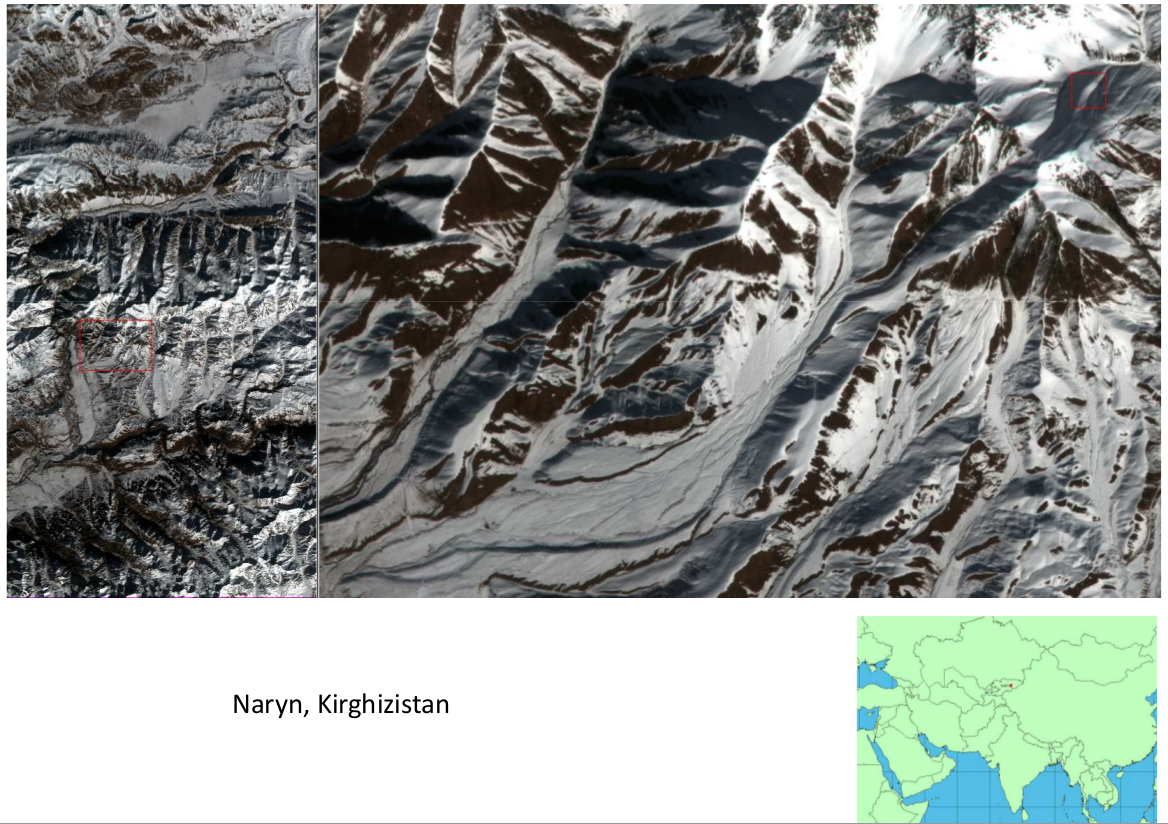
Hereafter some news on the status of the Venµs mission.Venµs was successfully launched from the Kourou space port on August 1st by a VEGA launcher: https://vega.cnes.fr/en/live-vega-launch-venus-august-first-2017 First images were acquired by mid-August (see below for examples). The commissioning phase is still running. This phase consists in checking the whole system, including the satellite, the camera, the download of the images and data to the Kiruna receiving station, the ground processing chains, as well as the geometric and radiometric calibrations. All these components are in a good health and working well. However, given the very demanding requirements in terms of multitemporal registration, more work than anticipated is needed to fine tune the AOCS (Attitude and Orbital Control Subsystem) and the processing algorithms. In addition, the first part of the in-flight demonstration of the electric engine developed by RAFAEL (called IHET) will take place from mid-december to mid-january. For these reasons, CNES and ISA plan to resume the systematic acquisitions of the scientific sites early 2018. Preparing the reference images for every site and checking the quality of time series will also take some weeks. We anticipate delivering the Level 1 (top of the atmosphere reflectances, orthorectified) products by april 2018, but all the data acquired from the beginning of systematic acquisitions will be processed and made available on the Theia web site:http://www.theia-land.fr/en/products/venus Level 2 data (top of the canopy reflectances) might be available slightly later since the method we use requires a time series of data.You will find some examples of images following the links below : https://presse.cnes.fr/en/france-israel-space-cooperation-venus-vegetation-monitoring-satellite-sends-back-first-imagesand here: https://www.cesbio.cnrs.fr/multitemp/?p=11215https://www.cesbio.cnrs.fr/multitemp/?p=11096https://www.cesbio.cnrs.fr/multitemp/?p=11344 The Moon is also acquired for calibration monitoring purposes:https://www.cesbio.cnrs.fr/multitemp/?p=11344 We thank you for your patience. We are doing our best to provide you with quality products.Happy New Year to you all