Our new job: gardeners !

=>

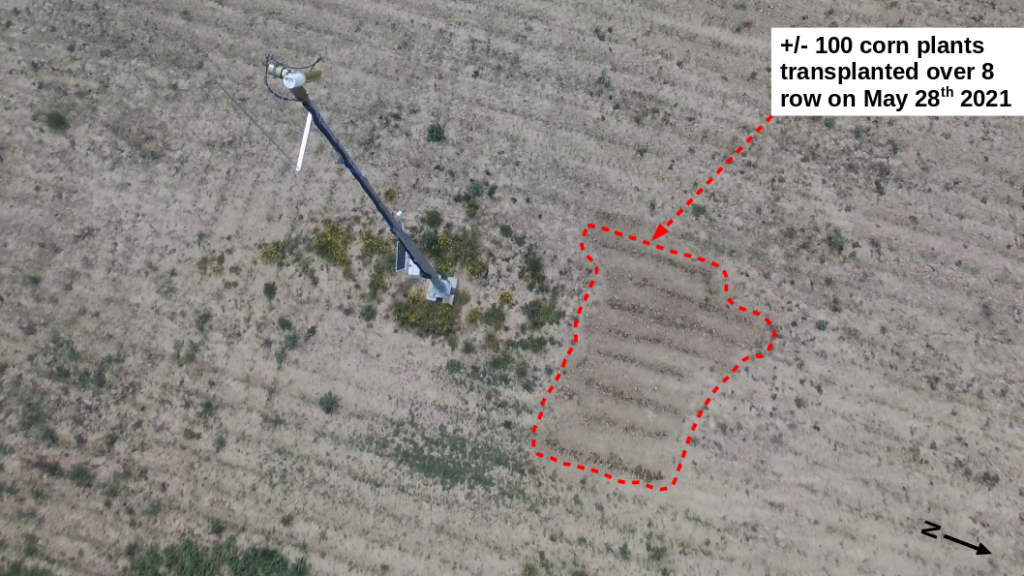
After a first tractor came too close from our ROSAS station, the next one passed by a little too far. Even if we’re never satisfied, it is much better ! This tractor sowed the maize on the plot on which we have built the station.  If it is acceptable to leave a two meter circle of uncultivated ground around the mast (the foot of the mast is masked in the processing), the gap without maize plants was much too large and reached six meters.

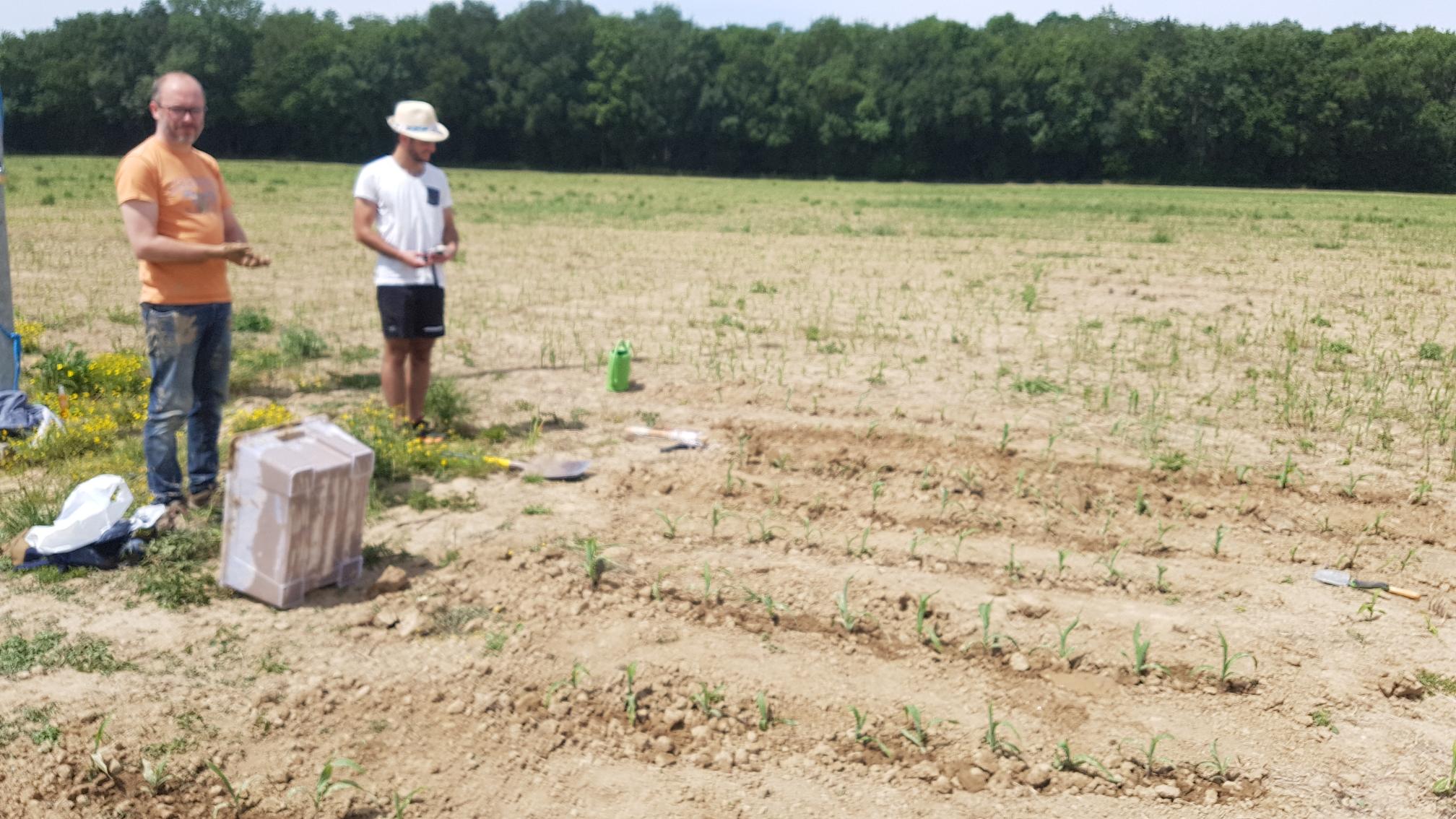
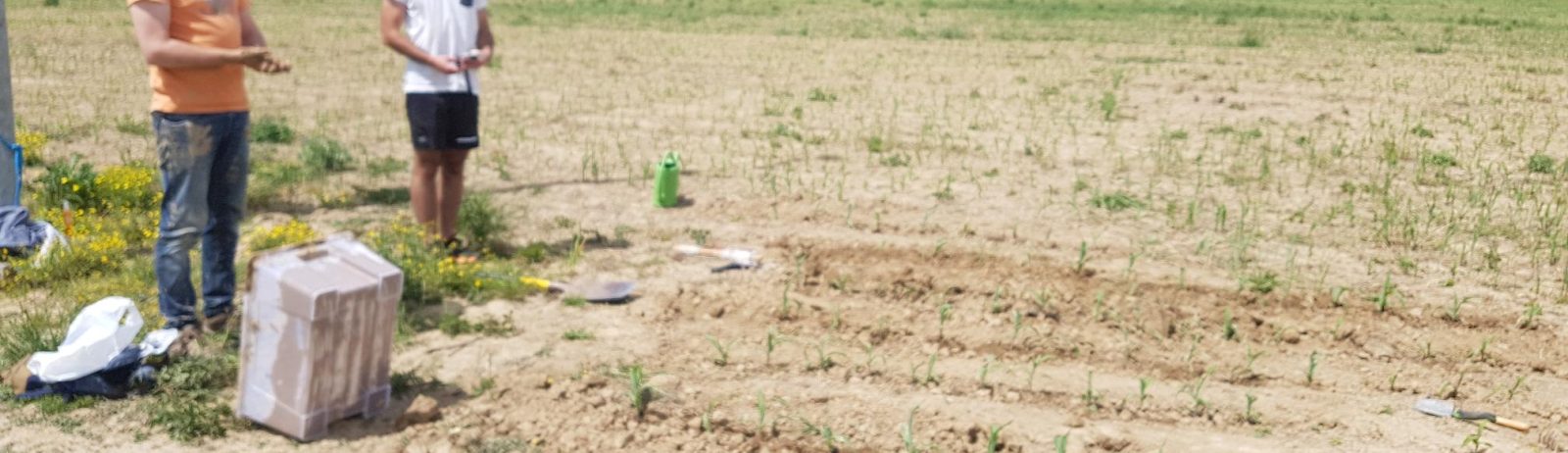
The MAJA team at work (you know that MAJA, the wasp, has yellow and black stripes)

To solve that issue, on the 28th of May, our little team went gardening to transplant a few sprouts of Maize to the foot of the mast. Without a tractor, and at 500 m from the closest water source, it was quite an effort, but much more fun that spending the day in video conferences. As always, Jerome organized this perfectly, and you should see how he pampers the sprouts,  Micaël Lassalle makes an excellent water carrier,  I am the shovel expert.

Below is the result as seen from above, we hope our little plants will grow as well there than in their initial location.
 

Plus d'actualités

Combien de temps met la surface à se réchauffer après le passage d’un nuage ?

Combien de temps met le fût du canon à se refroidir ? Fernand Raynaud => Cette citation vient du fameux sketch de Fernand Raynaud, elle est soi-disant tirée d’un manuel militaire à destination des soldats: Le sketch est un peu long, je vous rappelle la réponse : un certain temps. Nous avons étudié une question […]

Impact de l’éclipse du 12 août 2026 sur la production d’électricité photovoltaïque en Espagne

L’énergie photovoltaïque (PV) fournit plus de 20 % de l’électricité en Espagne, et cette part a atteint un nouveau sommet en juillet 2026 (28,3 % du mix électrique mensuel du pays). Certains médias se sont inquiétés de la baisse de la production d’énergie photovoltaïque lors de l’éclipse du 12 août 2026. Le Monde expliquait que […]

Suivi du manteau neigeux dans les parcs naturels des Alpes franco-italiennes

Dans les Alpes, le manteau neigeux est un stock d’eau saisonnier naturel dont dépendent la faune, la flore et les humains pour de multiples usages (refuges, bétail, etc.). Dans le cadre du projet ACLIMO financé par le programme européen Interreg ALCOTRA, le Cesbio a été sollicité pour mettre en oeuvre un outil d’estimation de l’équivalent […]

Rechercher