La barrière de glace orientale du glacier Thwaites est en train de craquer

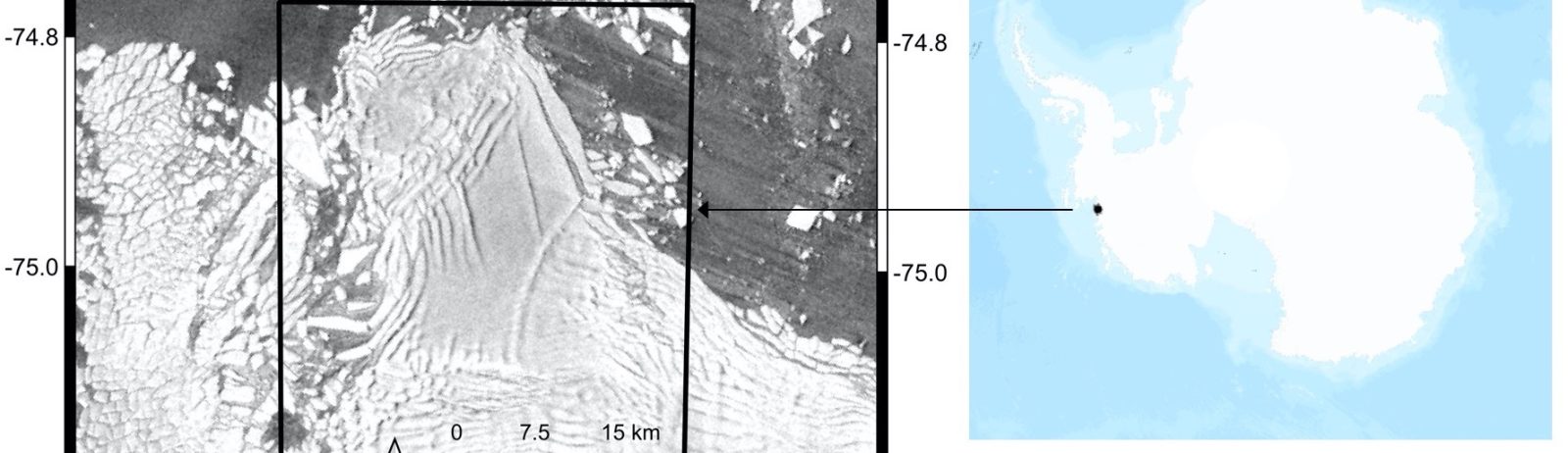
Thwaites est un immense glacier en Antarctique qui contribue déjà à 4% de la hausse du niveau des océans à lui tout seul. La barrière de glace flottante devant le front oriental du glacier agit comme un barrage qui ralentit le flux de glace du continent vers l’océan. Si cette plateforme de glace se brise, le glacier Thwaites s’accélérera et sa contribution à la hausse du niveau de la mer pourrait atteindre 25%. A partir d’images Sentinel-1, Pettit et al. 2021 ont remarqué que cette plateforme est en train de se fracturer. On peut voir les crevasses apparaître sur cette animation :

Pour en savoir plus :

https://www.washingtonpost.com/climate-environment/2021/12/13/thwaites-glacier-melt-antarctica/
https://www.science.org/content/article/ice-shelf-holding-back-keystone-antarctic-glacier-within-years-failure

Source

Pettit, Erin C., Christian Wild, Karen Alley, Atsuhiro Muto, Martin Truffer, Suzanne Louise Bevan, Jeremy N. Bassis, Anna Crawford, Ted A. Scambos, et Doug Benn. 2021. « Collapse of Thwaites Eastern Ice Shelf by intersecting fractures. » In . AGU. https://agu.confex.com/agu/fm21/meetingapp.cgi/Paper/978762.

Plus d'actualités

The missing link to valorize CESBIO’s applicative research works

=>  My colleagues at CESBIO are extremely creative! Over the past ten years, they have developed a wide range of new products and methods for extracting information from Copernicus data. They don’t just develop and validate the method on a few sites; they continue their work until they have produced data for the whole of […]

Le chaînon manquant dans la valorisation des travaux de recherche en télédétection

=> Mes collègues du CESBIO sont très créatifs ! Ils ont mis au point, au cours des dix dernières années, un grand nombre de nouveaux produits et de méthodes d’extraction de l’information à partir des données Copernicus (Sentinel-1 et 2). Et bien souvent, ils ne s’arrêtent pas à la mise au point de la méthode […]

Three Sentinel-2 satellites instead of two: impact on the retrieval of the snow disappearance date

Due to the success of Olivier’s petition, ESA kept Sentinel-2A operational after the launch of Sentinel-2C. Having three operational satellites instead of two increases the revisit, which should improve the quality of the derived products, and therefore the reliability of operational services based on Sentinel-2 data. One of this service is the Copernicus’ High Resolution […]

Rechercher